QuietSpecs

We may earn a commission when you buy through links on this page. As an Amazon Associate we earn from qualifying purchases. How we compare products

Quietest grain mill: KoMo's hand mill lists ca. 60 db, its electric mills 70 and 72

Written by
· 5 min read

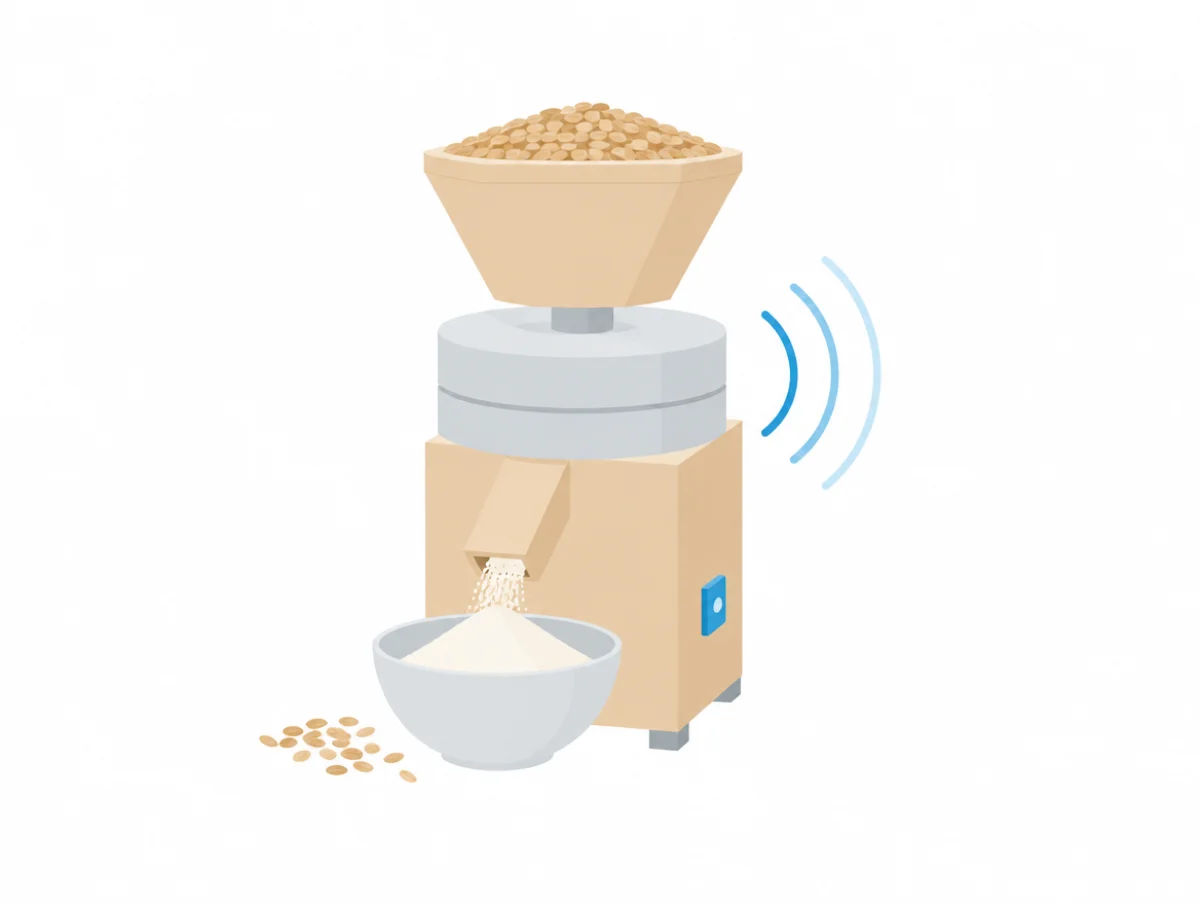
Illustration of a wooden countertop stone grain mill with a hopper on top and a small bowl of flour under the spout

Among grain mills sold in the US, only KoMo prints a noise figure, so KoMo's mills are ranked against each other and nothing else. Its hand mill lists the lowest, "ca. 60 db" with spelt on the fine setting.

Every 250 W and 360 W KoMo electric mill, including the Fidibus 21, KoMoMio and Fidibus Classic, lists ca. 70 db on that basis, and the 600 W Fidibus XL lists ca. 72 for twice the output. KoMo names no distance or standard.

NutriMill, Mockmill, WonderMill and Salzburger publish words or nothing, so their mills are not ranked.

On this page
  1. How we chose
  2. Our picks
  3. How to choose
  4. Comparison
  5. FAQs
  6. Bottom line
  7. Review history

A quick look at the quietest grain mills

KoMo, an Austrian maker of stone grain mills, is the only grain mill brand with 110 V mills in the US that prints a noise figure. Every mill page on its store carries one row, approximate decibels with spelt on the fine setting, and that row is what this guide ranks.

It is a narrow basis. KoMo names no distance, weighting or standard, so its figures are compared only with each other. NutriMill, Mockmill, WonderMill and Salzburger publish no number at all, and their mills are listed without a rank.

How did we pick these grain mills?

A grain mill qualified as a pick when its maker printed a plain noise value for a mill also sold in America, and values were ranked only against the same maker's, since no maker names a distance or standard.

We read KoMo's product pages on komo.bio, where each electric mill offers a "US Kabel - 110 Volt Ausführung", and its international dealer page, which links Pleasant Hill Grain for the USA. KoMo writes in German; the quotes are KoMo's own words.

We also read NutriMill's mill pages, Mockmill's US store, about page and four US manuals, Mockmill's German store, WonderMill's site, and the Salzburger maker's store, which shows no noise figure. hawos sells 110 V versions of two mills from Germany, but we found no US dealer, so hawos is left out.

KoMo shows prices in euros only, for the US cord versions as well, and showed most of them sold out on November 4, 2026; we give those euro prices and no dollar figure. NutriMill and Mockmill prices are their own US prices that day. WonderMill shows none.

We did not measure any grain mill ourselves. Each decibel value here comes straight from a KoMo product page, with the German row label quoted in our catalog notes.

QuietSpecs' picks of the quietest grain mills

Lowest KoMo figure, ca. 60 db by hand

KoMo Hand Mill (Handmühle), hand-cranked stone grain mill

  • Noise: "ca. 60 db", spelt on fine, no distance stated (komo.bio)
  • Price: No maker list price
  • Best for: Small batches milled early or late while others sleep
  • Skip it if: You bake several loaves a week and want the flour in minutes

KoMo's technical table for its Handmühle reads "Lautstärke (Dinkel - fein) | ca. 60 db": about 60 with spelt on the fine setting, the same basis KoMo uses for its electric mills and 10 below every one of them.

You do the turning, on a ball-bearing crank, at about 50 g of wheat a minute.

It clamps to a table, holds about 600 g in a solid maple hopper and grinds on 85 mm corundum ceramic stones. komo.bio showed it sold out at 349 € on November 4, 2026.

Smallest electric KoMo, ca. 70 db

KoMo Fidibus 21 Grain Mill, 250 W, 110 V

  • Noise: "ca. 70 db", spelt on fine, no distance stated (komo.bio)
  • Price: No maker list price
  • Best for: One or two bakers who want an electric mill for the price of a good mixer
  • Skip it if: You fill a big bowl in one run, where the KoMoMio's hopper suits better

The Fidibus 21 table on komo.bio reads "Lautstärke (Dinkel - fein) | ca. 70 db", the figure KoMo gives each of its 250 W and 360 W mills, so it ties the KoMoMio and Fidibus Classic.

It does so with the smallest package: 250 W, 75 mm stones, an 850 g hopper and 6.2 kg, sized by KoMo for one or two people. Output is the same 100 g a minute.

KoMo listed the 110 V version at 421 € on November 4, 2026, shown sold out.

Biggest hopper at ca. 70 db

KoMo KoMoMio Grain Mill, 360 W, 110 V

  • Noise: "ca. 70 db", spelt on fine, no distance stated (komo.bio)
  • Price: No maker list price
  • Best for: Families milling a full hopper of wheat for weekly bread
  • Skip it if: Counter height is tight, since it stands 37 cm tall

KoMo's KoMoMio page prints the same "ca. 70 db" for spelt on fine as the Fidibus 21, with a 360 W motor, 85 mm stones and a 1200 g hopper, the largest of any 70 db KoMo mill we list.

KoMo sizes it for three to five people. The body is beech multiplex with ABS panels in six colors, 37 cm tall and 8 kg. Output stays at 100 g a minute.

The 110 V version was 386 € on komo.bio on November 4, 2026, every color shown sold out.

Solid beech classic, ca. 70 db

KoMo Fidibus Classic Grain Mill, 360 W, 110 V

  • Noise: "ca. 70 db", spelt on fine, no distance stated (komo.bio)
  • Price: No maker list price
  • Best for: Bakers who want an all-wood mill on the counter
  • Skip it if: Price matters more than the cabinetwork

The Fidibus Classic table also reads "ca. 70 db" with spelt on fine. What separates it from the KoMoMio is the case: solid beech with traditional hand jointing, oiled with linseed, where the Mio uses multiplex and ABS.

The motor is the same 360 W, the stones 85 mm, the hopper 1000 g, and it weighs 8 kg. KoMo prints that same 70 for the Fidibus Medium, Magic and PK 1.

The US cord version was 640 € on komo.bio, November 4, 2026, shown sold out.

Fastest pick, ca. 72 db

KoMo Fidibus XL Grain Mill, 600 W, 110 V

  • Noise: "ca. 72 db", spelt on fine, no distance stated (komo.bio)
  • Price: No maker list price
  • Best for: Large households milling several kilos a week
  • Skip it if: You mill under a kilo at a time, where a 70 db mill does it

KoMo lists the Fidibus XL at "ca. 72 db" with spelt on fine, 2 above its 360 W mills, and pairs that with a 600 W motor that mills about 200 g of wheat a minute, double their rate.

So a batch takes about half as long for a figure 2 db higher. It has a 1200 g hopper, 85 mm stones, a solid beech case and weighs 9 kg, sized for five or more.

The 110 V version was 638 € on komo.bio, November 4, 2026, shown sold out.

How to choose

New to the units? Read dBA explained or sones vs decibels.

Which grain mill is the quietest?

KoMo's hand mill is the quietest grain mill on any maker's figures: KoMo lists it at "ca. 60 db" with spelt on the fine setting, 10 below every electric mill KoMo sells.

On that one KoMo row, the picks fall into three steps:

  • Hand mill: ca. 60
  • Fidibus 21, KoMoMio, Fidibus Classic: ca. 70
  • Fidibus XL: ca. 72

The hand mill earns its place by being turned by hand. It mills about 50 g of wheat a minute, half the rate of the electric mills, so a kilo of flour takes about 20 minutes of cranking.

Which electric grain mill is the quietest?

Among electric grain mills, KoMo's 250 W and 360 W models share the lowest printed figure, ca. 70 db with spelt on fine, so the Fidibus 21, KoMoMio and Fidibus Classic tie.

KoMo prints the same 70 for the Fidibus Medium, Magic, PK 1, KoMoMio ECO and the Duett 100 mill and flaker. With eight models on one figure, noise cannot choose between them; hopper size, case and price can.

The Fidibus 21 is the compact one, with an 850 g hopper and 421 € for the US cord version. The KoMoMio holds 1200 g for 386 €. The Fidibus Classic swaps multiplex for solid beech at 640 €.

Is a hand grain mill quieter than an electric one?

On KoMo's figures, yes: its hand mill lists ca. 60 db for spelt on fine, against ca. 70 for its quietest electric mills on the same row.

A crank takes the motor out of the machine, though KoMo does not say where its 10 db gap comes from. What it does print is the cost in speed: about 50 g of wheat a minute by hand, against 100 g for a 250 W Fidibus 21.

KoMo also sells a 140 W drive that turns the hand mill by motor, listed at "ca. 62 db". That row names no grain or setting, so we quote it without placing it between the 60 and the 70.

Does a bigger motor make a grain mill louder?

Slightly, on KoMo's numbers: its 600 W Fidibus XL and XL Plus list ca. 72 db for spelt on fine, 2 above the ca. 70 of its 250 W and 360 W mills.

The XL mills about 200 g of wheat a minute, twice the rate of the smaller mills. A run of the same size therefore takes about half as long, and for many kitchens the shorter run will matter more than 2 db.

KoMo's 700 W Jumbo, sized for heavy users, also lists ca. 72 at about 350 g a minute.

How loud is a NutriMill grain mill?

NutriMill gives no decibel number for its grain mills; its pages describe noise in words for the Impact, Harvest and Classic.

The Impact page says the mill "runs noticeably quieter than older high-speed mill designs, reducing operating decibels", without saying by how much. The Harvest page calls its stone mill "whisper-quiet". The 2026 Classic adds a "Sound-dampening hopper lid", again with no figure.

So NutriMill's mills cannot be placed beside KoMo's 70. They are in the also considered list with their prices.

Do Mockmill and WonderMill print decibel ratings?

No. Mockmill's US manual and product pages print no noise figure for its Lino or Professional mills, and WonderMill's pages make a quiet claim without a number.

Mockmill's August 2019 manual for the Lino 100, Lino 200, Professional 100 and Professional 200 lists 360 W or 600 W, about 1500 rpm on 60 Hz, 90 mm stones and output, and stops there. Its manual for the Mockmill 100 and 200 has no figure either, nor do the Mockmill pages on its German store.

WonderMill's electric mill page says "The WonderMill is the quietest and fastest mills available." None of the 23 WonderMill pages we read gives a decibel figure behind that.

What does "ca. 70 db" mean on a KoMo mill?

It means about 70 decibels, which is what "ca." stands for in German, measured while the mill grinds spelt on its fine setting, by KoMo's own row label.

KoMo writes "db" with no A for weighting, and gives no distance from the mill, so the number cannot be set against a figure from another brand or another appliance. Our dBA explainer covers why the weighting and distance matter.

Because the grain and setting are fixed across KoMo's range, the gap between a 60, a 70 and a 72 is a fair comparison inside KoMo. KoMo gives no figure for coarse settings or for other grains.

How the quietest grain mills compare

ProductNoiseOutputWeightPrice
KoMo Handmühle (Hand Mill)"ca. 60 db", spelt on fine, no distance stated (komo.bio)About 50 g of wheat per minute2.5 kgNot verified yet
KoMo Fidibus 21 (US Kabel, 110 Volt)"ca. 70 db", spelt on fine, no distance stated (komo.bio)About 100 g of wheat per minute6.2 kgNot verified yet
KoMoMio (US Kabel, 110 Volt)"ca. 70 db", spelt on fine, no distance stated (komo.bio)About 100 g of wheat per minute8 kgNot verified yet
KoMo Fidibus Classic (US Kabel, 110 Volt)"ca. 70 db", spelt on fine, no distance stated (komo.bio)About 100 g of wheat per minute8 kgNot verified yet
KoMo Fidibus XL (US Kabel, 110 Volt)"ca. 72 db", spelt on fine, no distance stated (komo.bio)About 200 g of wheat per minute9 kgNot verified yet

Frequently asked questions

What is the quietest grain mill?

On the only figures a grain mill maker prints, KoMo's hand mill: "ca. 60 db" with spelt on the fine setting. The quietest electric KoMo mills, including the Fidibus 21, KoMoMio and Fidibus Classic, list ca. 70 on that basis. No other maker selling in the US gives a number to compare.

What is the quietest electric grain mill?

By KoMo's figures, any of its 250 W or 360 W mills, which all list ca. 70 db for spelt on fine. The Fidibus 21 is the smallest and cheapest with a US cord, at 421 €. The 600 W Fidibus XL lists ca. 72.

Is there a silent flour mill?

No maker claims one. The lowest figure printed for any home flour mill we found is KoMo's ca. 60 db for its hand mill, and a crank still grinds stone on grain. NutriMill's "whisper-quiet" and WonderMill's "quietest" carry no number.

How loud is a NutriMill?

NutriMill does not say. Its Impact page says the mill "runs noticeably quieter than older high-speed mill designs", the Harvest page says "whisper-quiet", and the Classic page lists a sound-dampening hopper lid, but none gives a decibel figure.

Are stone grain mills quieter than impact mills?

The published figures cannot say. KoMo prints values only for its stone mills, and NutriMill and WonderMill print none for their impact mills, so no stone and impact pair shares a figure.

Does a bigger motor make a grain mill louder?

Within KoMo, slightly. Its 250 W and 360 W mills list ca. 70 db for spelt on fine, and its 600 W Fidibus XL and XL Plus list ca. 72 while milling about twice as fast.

The bottom line

I went in expecting the big American names to settle this, since NutriMill and WonderMill both lean hard on quiet in their copy. Neither gives a number. The only maker that does is KoMo, in Austria, and it prints the same short row on every mill page: spelt, fine setting, approximate decibels. That makes KoMo's mills comparable with each other and with nothing else.

Read that way, the useful finding is how little the size of the motor moves the figure. KoMo's 250 W and 360 W mills share 70, and its 600 W XL adds two. For a small household I would buy the Fidibus 21 and save the difference; if I baked for five every week, I would take the 2 db for the XL's doubled output and run it for half as long.

Stanley Alu, founder and editor

What we also considered

These are worth knowing about, and why they didn't make the list.

  • KoMo Electric Drive for the Hand Mill (Elektroantrieb für Handmühle), 110 V

    KoMo's 140 W drive turns the hand mill by motor and lists "ca. 62 db", but that row names no grain or setting, unlike the mill pages, so it is quoted and not ranked. 298 € for the 110 V version.

    Search Amazon for this model
  • KoMo KoMoMio ECO Grain Mill, 250 W, cork hopper, 110 V

    A 250 W KoMoMio with a cork hopper, at the same ca. 70 db for spelt on fine. 350 € with a US cord, the cheapest electric KoMo, but its hopper holds 850 g.

    Search Amazon for this model
  • KoMo Duett 100 Grain Mill and Flaker, 360 W, 110 V

    A 360 W mill and a flaker in one case, rated ca. 70 db as a single machine with no separate flaker figure. 899 € with a US cord and 15.5 kg.

    Search Amazon for this model
  • KoMo Fidibus XL Plus Grain Mill, 600 W, 110 V

    The XL's heavy-use sibling, still 600 W and ca. 72 db, with 17 cm under the spout. 933 € with a US cord buys no lower figure.

    Search Amazon for this model
  • NutriMill Impact Grain Mill

    NutriMill says its Whisper Mill design "runs noticeably quieter than older high-speed mill designs", a relative claim with no decibel figure. $249.00.

    Search Amazon for this model
  • NutriMill Harvest Stone Grain Mill, 450 W

    A 450 W stone mill in bamboo that NutriMill calls "whisper-quiet" without a number. $499.00.

    Search Amazon for this model
  • NutriMill Classic Grain Mill (2026), 1200 W

    The 1200 W impact mill now has a "Sound-dampening hopper lid", but NutriMill prints no figure for it. $349.00, shown out of stock.

    Search Amazon for this model
  • Mockmill Lino 100 Stone Grain Mill

    Mockmill's US manual for the Lino and Professional mills lists power, speed and output but no noise figure, and its product pages print none. $680.00.

    Search Amazon for this model
  • WonderMill Electric Grain Mill

    WonderMill calls it "the quietest and fastest mills available" with no decibel figure on any page we read, so the claim cannot be checked.

    Search Amazon for this model

How we reviewed this article

Every statement here comes from the 22 maker documents, standards and agency pages listed under Sources, quoted where the wording matters. We did not measure, inspect or repair anything ourselves. Each substantive revision is dated below. How we work

  1. Current version

    First published, written by Stanley Alu.

Sources

Every figure on this page was read on one of the pages below. We did not measure anything ourselves.

All 22 sources
Manufacturer pages and manuals for every product

Related guides