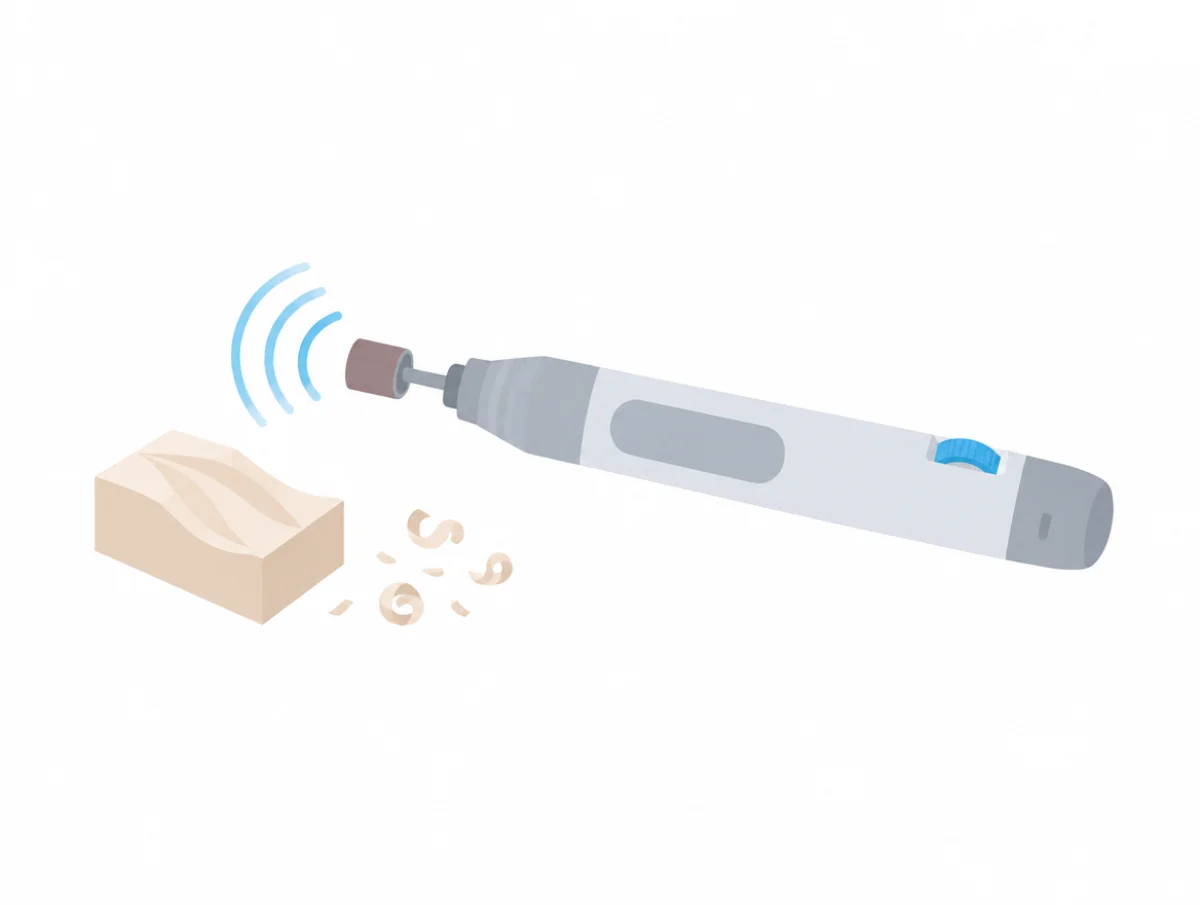
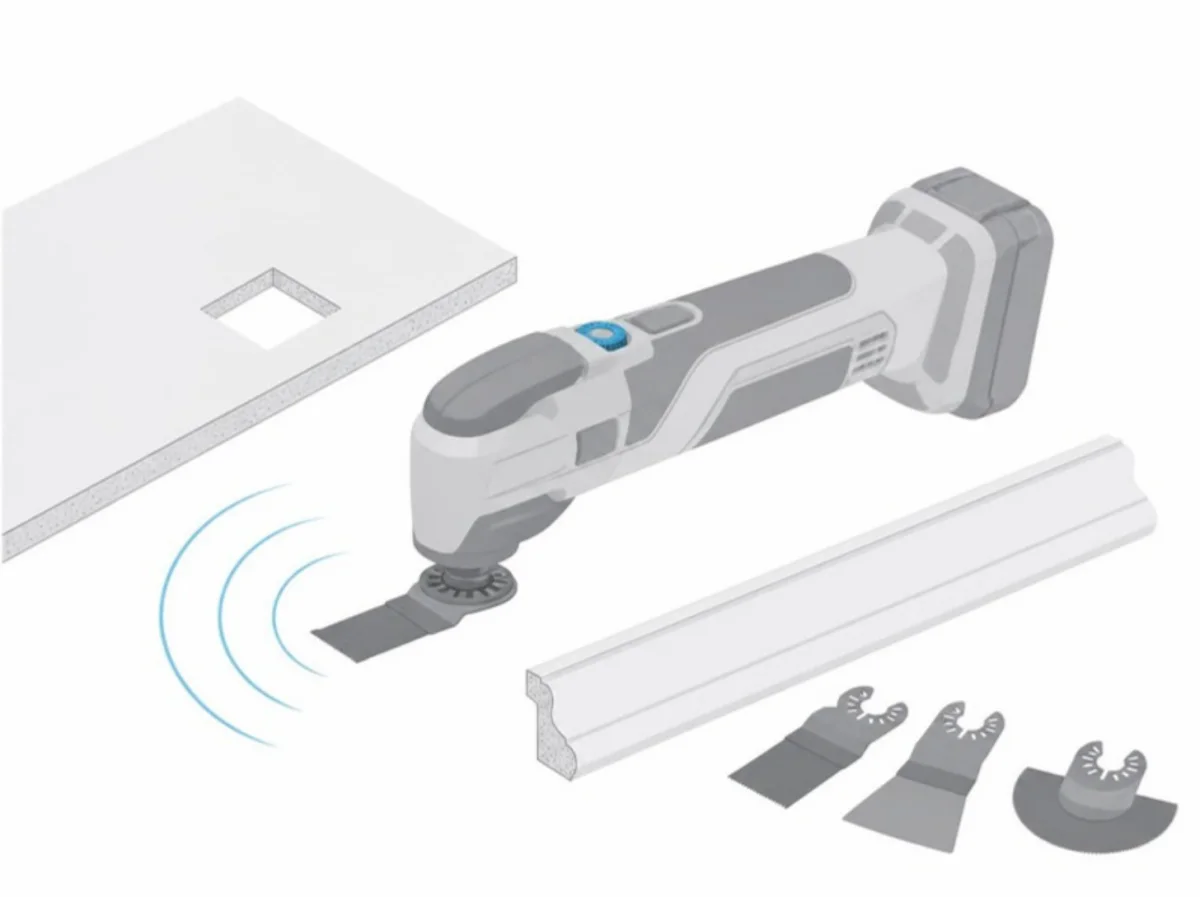
Dremel's 8250 is the quietest rotary tool by declared value: 71 dB(A) sound pressure in Dremel's UK manual for the 8240 and 8250, the lowest value any maker gives a rotary tool sold in the US.
Each table is ranked on its own:
- 12V table: 8250 at 71, 8240 at 73
- Corded table: 4300 at 74.4, 4000 at 78.0
- 8150 manual: 74, to EN 60745-2-23
- Ceilings: Lite (7760) and Stylo+ (2050), below 70
A 71 next to a 74.4 looks like a clear win for the 8250. It may be one, but the two tables were printed in different formats, one naming a standard in its declaration and one naming none, so we keep the 8250 and the 4300 in separate lists.
How loud is a Dremel?
A current US Dremel declares 71 to 78 dB(A) of sound pressure in Dremel's UK documents, or below 70 for the Lite and Stylo+. Sound power runs from 79 dB(A) for the 8250 to 89 for the 4000.
Sound pressure is the level near the tool, and sound power is the total it gives off, which is why each Dremel declaration puts the second number 8 to 11 decibels higher. The two are never compared across kinds here; our sound power explainer shows why.
None of Dremel's tables says which speed, accessory or material the tool was running when it was measured. Dremel's current manual for the 3000 and 4250 adds that emissions in actual use can depart from the declared values, "ESPECIALLY WHAT KIND OF WORKPIECE IS PROCESSED".
Which cordless Dremel is the quietest?
The 8250 is the quietest cordless Dremel with a declared value, 71 dB(A), two below the 8240 in one table. The 4V Lite is declared below 70, which is a ceiling rather than a lower value.
The 8250 and 8240, side by side
Both 12V tools share a single Dremel UK manual, one row per tool: 71 and 79 dB(A) for the brushless 8250, 73 and 81 for the 8240, all with an uncertainty of 3 dB(A). Two decibels is smaller than that uncertainty, so the 8250 leads on paper, and narrowly.
The 8240 cost $79.99 against $149.99 for the 8250 on November 4, 2026. The 8250 adds the brushless motor, a 3.0 Ah pack and a lifetime warranty.
The 8150, in a manual of its own
The pen-shaped 8150 is declared at 74 dB(A) for pressure and 82 for power, K = 3 dB, and its manual is the only one that names EN 60745-2-23 in the noise line itself. Because the wording differs, it is not slotted between the 12V tools.
The Lite and the 8260, declared below 70
Dremel UK's manual for the 7760 Lite prints "<70" for sound pressure and no sound power. So does its manual for the 12V brushless 8260. The 8260 does not appear in Dremel's US rotary tool listing, though, so only the Lite is a pick.
Which corded Dremel is the quietest?
The 4300 is the quietest corded Dremel with a declared value, 74.4 dB(A) sound pressure, 3.6 decibels under the 4000's 78.0 in the same Dremel UK table.
That table also covers the 3000 at 77.1 and the 4250 at 72.5, neither sold on Dremel's US site now. Sound power follows the same order: 85.4 for the 4300 and 89.0 for the 4000.
The UK manuals now linked from the 4300 and 4000 pages cover only the 3000 and 4250. The 4300 and 4000 rows survive in an older edition still hosted on dremel.com, whose declaration lists all four tools with EN 60745-2-23:2013. Dremel UK's product pages print the same 74,4 and 78 today.
The Stylo+ and the 3100
The Stylo+ craft pen is declared at "<70.0" dB(A), a ceiling, under the same EN 60745-2-23:2013 its corded siblings name. The 3100, sold at $49.99, has no figure anywhere we looked, and we found no Dremel UK page or manual for it.
Dremel's figures change between manuals because its newer UK editions use a different table, with an uncertainty row and a repeated shock vibration row, and give higher sound pressure to the two tools printed in both.
The clearest case is the 3000. The older corded table gives it 77.1 dB(A) sound pressure; Dremel's 2026 manual for the 3000 metal kit gives 80.1, with the same 88.1 for sound power. The 4250 moves from 72.5 to 75.5, and Dremel UK's 4250 page now shows the newer figure.
That matters for reading the 8240 page. Dremel says the 8240 runs "with lower noise (compared to Dremel 8220)", yet the 8220's older-format manual declares 72.5 dB(A), below the 8240's 73 in the newer format. Editions like these are kept apart for that reason.
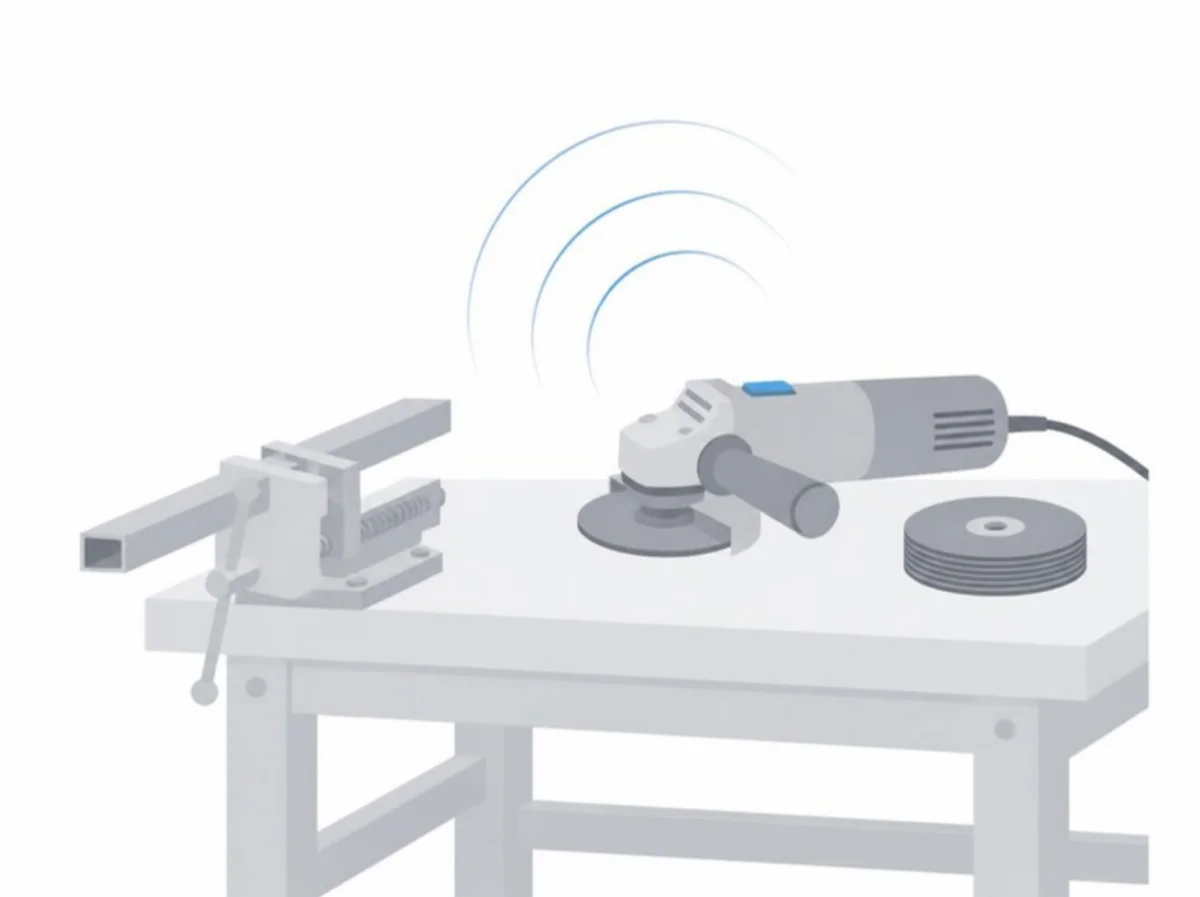
A die grinder is far louder on paper: DEWALT declares its cordless DCG426 at 92 dB(A) sound pressure and 103 sound power, K 3, under EN60745-2-23, about 18 decibels over the corded Dremel 4300.
Both declarations name EN 60745-2-23:2013, the part of the standard written for die grinders and small rotary tools, so this is one of the few cross-brand comparisons the documents allow. The DCG426 runs up to 25,000/min with a 1/4-in collet and is built for heavier metal work than any Dremel.
DEWALT's US manual for the DCG426B prints no noise figure; the 92 comes from its UK edition for the same Type 1 tool. Our die grinder guide sets it beside Makita, Milwaukee and Ingersoll Rand models.
No. Milwaukee, RYOBI, WEN and Proxxon give no decibel figure for the rotary tools they sell in the US, on their product pages or in the manuals we could open from their sites.
RYOBI comes closest, calling its PCL480B station the "Quietest Rotary Tool in its Class" with no number, class or rival named. Proxxon describes its IBS/E as "Quiet, precise and efficient!" and its 100W motor as quiet, again without a figure. Proxxon's 230V IBS/E abroad is sold as "NO 28 481", a different article number from the US 38481.
Milwaukee's page and manual for the 2460-20 M12 rotary tool print no figure, and neither do WEN's pages for six rotary tools or the 23114 manual.
Yes, according to Dremel's own manuals: the US 4300 manual warns that "Prolonged exposure to high intensity noise may cause hearing loss", and the UK corded manual shows "USE HEARING PROTECTION" among its symbols.
The 8150's UK manual goes further, printing "Wear hearing protection!" right after its 74 dB(A) declaration. Every figure on this page is a declared value from a standard test, not a reading from a bench like yours. Our page on power tool noise and hearing gives the NIOSH limits in minutes for levels like these.