Which air ratchet is the quietest?
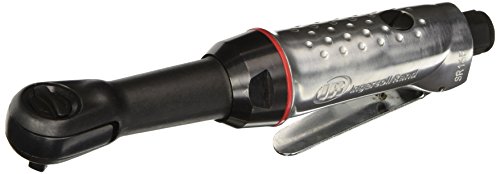
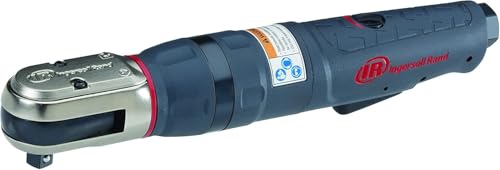
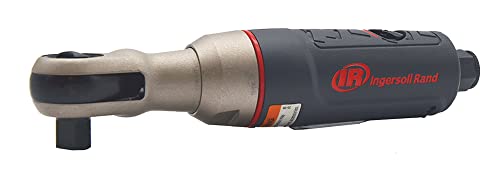
Ingersoll Rand's 105-D3 is the quietest 3/8 in. air ratchet on ISO 15744: 81.8 dB(A) sound pressure and 92.8 dB(A) sound power. Its 1/4 in. extended head twin, the 105-L2, lists 81.6.
The 3/8 in. air ratchets with ISO 15744 figures line up this way:
- Ingersoll Rand 105-D3: 81.8 dB(A)
- Chicago Pneumatic CP9427: 82 dB(A)
- Chicago Pneumatic CP825CT: 82 dB(A)
- Ingersoll Rand 1207MAX-D3: 85.0 dB(A)
- Chicago Pneumatic CP7829: 85 dB(A)
- Chicago Pneumatic CP7830Q: 85 dB(A)
- Ingersoll Rand 1105MAX-D3: 88.9 dB(A)
- Ingersoll Rand 1211MAX-D3: 91.1 dB(A) at free speed
- Ingersoll Rand 109XPA: 92.4 dB(A)
- Ingersoll Rand 107XPA: 94.4 dB(A)
- Ingersoll Rand 170G: 94.8 dB(A)
Both makers give a 3 dB uncertainty, so the top three are a tie in practice. The 13 decibel spread from top to bottom is not.
Every sound power figure on these sheets sits exactly 11 decibels above its pressure figure, so the power ranking runs in the same order. Chicago Pneumatic says so outright in the CP7830Q manual: "For sound power, add 11 dB(A)."
How do ratchet makers rate noise?
Air ratchet makers that name a test use ISO 15744, and cordless makers use EN62841-2-2 or the older EN60745. AIRCAT and Milwaukee print figures without naming any test.
Air ratchets
Ingersoll Rand's product information sheets carry a "Sound Level dB(A) (ISO15744)" column with pressure and power for each model. Chicago Pneumatic's manuals print LpA and LwA under a "Declaration of noise and vibration statement (ISO 15744 and ISO 28927-2)". Neither maker gives the edition of the standard, so we treat them as one group.
Ingersoll Rand's US pages call the same number a "Free Speed Sound Level", which tells you the tool was running unloaded. The impacting 1211MAX-D3 is the one model with a second figure, 90.6 dB(A) while impacting.
Cordless ratchets
Makita and DEWALT declare their cordless ratchets under EN62841-2-2 in European manuals, and those manuals match the US tools on speed and torque. Ingersoll Rand's R3130 is declared under EN60745, so its 86 dB(A) stays apart.
Pressure is what reaches the operator and power is the tool's total output; our explainer on the two covers why they never share a list.
What is the quietest cordless ratchet?
Makita's XRW01Z and RW01Z share the lowest EN62841-2-2 figure we found, 77 dB(A) sound pressure, declared through their European twins, the DWR180 and WR100D.
On that test the cordless ratchets line up this way, using DEWALT's newest manual:
- Makita XRW01Z (18V): 77 dB(A)
- Makita RW01Z (12V): 77 dB(A)
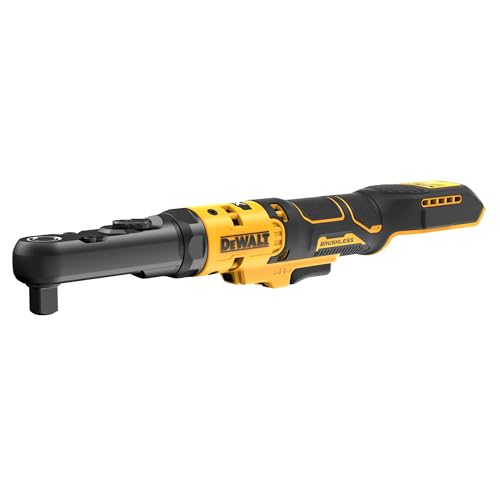
- DEWALT DCF510B: 79 dB(A)
- DEWALT DCF520B: 83 dB(A)
- DEWALT DCF513B: 85 dB(A)
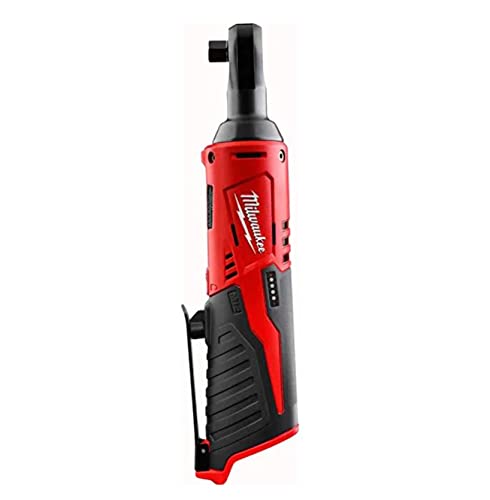
Milwaukee's European pages print 72 dB(A) for the M12 IR, the twin of the US 2457-20, and 81.95 to 84.26 for the M12 FUEL ratchets it sells in the US as the 2560-20, 2557-20 and 2566-20. None of those pages names a test, so Milwaukee ranks only against Milwaukee.
DEWALT gives no reason why its ratchet figures rose between manual editions: the 2022 declaration for the DCF510 gives 76 dB(A) sound pressure and a 2025 manual gives 79, while the DCF513 went from 82 to 85.
Sound power stayed at 87 for the DCF510 and 93 for the DCF513 in both editions. The newer manual also cites an amended part 1 of EN 62841, "EN 62841-1:2015 + A11:2022". We rank the 2025 figures because they are the most recent, and quote the older ones in each entry.
How quiet are AIRCAT ratchets?
AIRCAT prints 76 to 92 dBA across its current ratchets, lowest for the 1/4 in. 811 flex head. Its pages name no test or distance, so those figures rank only against each other.
AIRCAT's brand page promises "Half the Noise." with no reference tool. Its own 3/8 in. models print 81 for the 807 mini palm, 82 for the 801 and 802, 84 for the 805-HT and 88 for the 806.
One page contradicts itself. The 812-RW impacting ratchet claims "only (79 dBA)" in its features and lists 88 in its spec table, so we left it unranked.
Does a more powerful air ratchet make more noise?
Not on these sheets. Chicago Pneumatic's CP7830Q delivers 90 ft.lbf at 85 dB(A), while Ingersoll Rand's 107XPA lists 94.4 dB(A) for 54 ft-lb on the same test.
Inside Ingersoll Rand's own range, the 1207MAX-D3 gives 65 ft-lb at 85.0 and the smaller 1105MAX-D3 gives 30 ft-lb at 88.9. Exhaust design seems to count for more than torque; Chicago Pneumatic's CP7830Q manual says turning the exhaust deflector to "approximately 180° from the as-shipped position" gives its lowest noise.
The same pattern held for impact wrenches, where our impact wrench guide found torque a poor predictor of declared noise.
Are cordless ratchets quieter than air ratchets?
Probably, yet the evidence is indirect, since the two kinds are tested under different standards: Makita's battery pair declares 77 dB(A) under EN62841-2-2, against 81.6 for the lowest ISO 15744 air ratchet.
Ingersoll Rand sells both kinds and still tests them differently. Its 20V R3130 lists 86 dB(A) under EN60745, and its 105-D3 air mini lists 81.8 under ISO 15744.
An air ratchet also needs a compressor running somewhere, which none of these figures include. The air compressor guide ranks that half of the setup, and the die grinder guide covers another tool on the same hose.
Is ear protection needed for an air ratchet?
Yes, wear ear protection with any ratchet in this guide; Makita's manuals for the DWR180 and WR100D carry the line "WARNING: Wear ear protection." Next to their 77 dB(A) declarations, both state "The noise level under working may exceed 80 dB (A)."
Chicago Pneumatic's declarations say its values "are not adequate for use in risk assessments and values measured in individual work places may be higher." Ingersoll Rand advises on site measurements for the same reason. For exposure times at levels like these, see how power tool noise adds up for your hearing.