An under sink reverse osmosis system is rarely silent. While it makes water, part of the supply passes through the membrane into the tank and the rest leaves as reject water down the sink drain, so most of what you hear is that drain flow or the tank filling.
The makers split the sounds into two groups. GE Appliances calls a slight hum, a dripping or gurgling drain and a short whine from a new tank normal. The ones worth acting on are a hum that lasts for days, a gurgle that never stops, a loud whine and a loud noise on a fresh install.
Everything below comes from a GE Appliances support article and owner's manual chart, the APEC RO-Hi owner's manual and a maintenance guide on Frizzlife's own blog. We did not install, run or listen to any RO system for this page. No maker in these documents prints a decibel figure for an RO system, so this page gives none.
Why is my reverse osmosis system making noise?
A reverse osmosis system makes noise mainly because reject water is flowing to the drain or the storage tank is refilling. GE says the system "will make some slight noises as it processes water, even though the faucet is off."
Match the sound to the cause:
| Sound | What the makers say causes it | Normal? |
|---|---|---|
| Slight hum while you draw water | Pressure change as the system starts processing more water (GE) | Yes |
| Hum that lasts | Air bubbles trapped in the check valve (APEC) | Fixable |
| Dripping or gurgle at the sink drain | Reject water flowing down the drain (GE) | Yes |
| Gurgle at an air gap faucet | Drain water passing through the faucet; may go with supply pressure of 80 psi or more (GE manual) | Can be reduced |
| Whine from a new system | Tank pressurizing for the first time (GE) | Yes, for a few minutes |
| Loud whine | Missing filters or membrane (GE) | No |
| Loud noise on a new install | Probably installed wrong (GE) | No |
GE's support article, Reverse Osmosis, Noises, opens by saying an RO system "will create some sound or noise when it is operating" and then sorts the sounds into normal and abnormal lists. Most of the table above comes from those two lists.
Is it normal for reverse osmosis to gurgle?
Yes. GE puts it plainly: "A slight dripping/gurgle noise from the sink drain is normal. This is reject process water flowing down the sink drain." The membrane always sends some water away, so the drain runs whenever the system is making water.
Frizzlife reaches the same verdict in its gurgling noise guide, published on the maker's blog on June 14, 2026: "Brief gurgling after using water is normal if the tank is refilling." After filter changes, sanitizing or a new membrane, it expects the sound to settle within one or two full tank cycles.
The location can mislead you. "If your setup uses an air-gap faucet, the sound may seem like it is coming from the faucet body itself," Frizzlife writes, and it calls that often normal because air and drain water mix there by design. It also warns against pinching tubing or blocking openings to silence an air gap, since the gap keeps drain water from siphoning back into drinking water.
When gurgling turns into a maintenance signal
Frizzlife judges the sound by its pattern. A gurgle deserves a look if it "is suddenly louder than before, lasts much longer, happens when no water was recently used, or comes with slow faucet flow, continuous drain flow, or leaks."
The slow changes it lists are buildup in the drain saddle, a narrowed air gap outlet, sagging or kinked tubing and tank pressure drifting over the years. Its advice is to check whether the system still fills, shuts off, drains and filters the way it used to, rather than chasing the noise itself.
Quieting the drain line under the sink
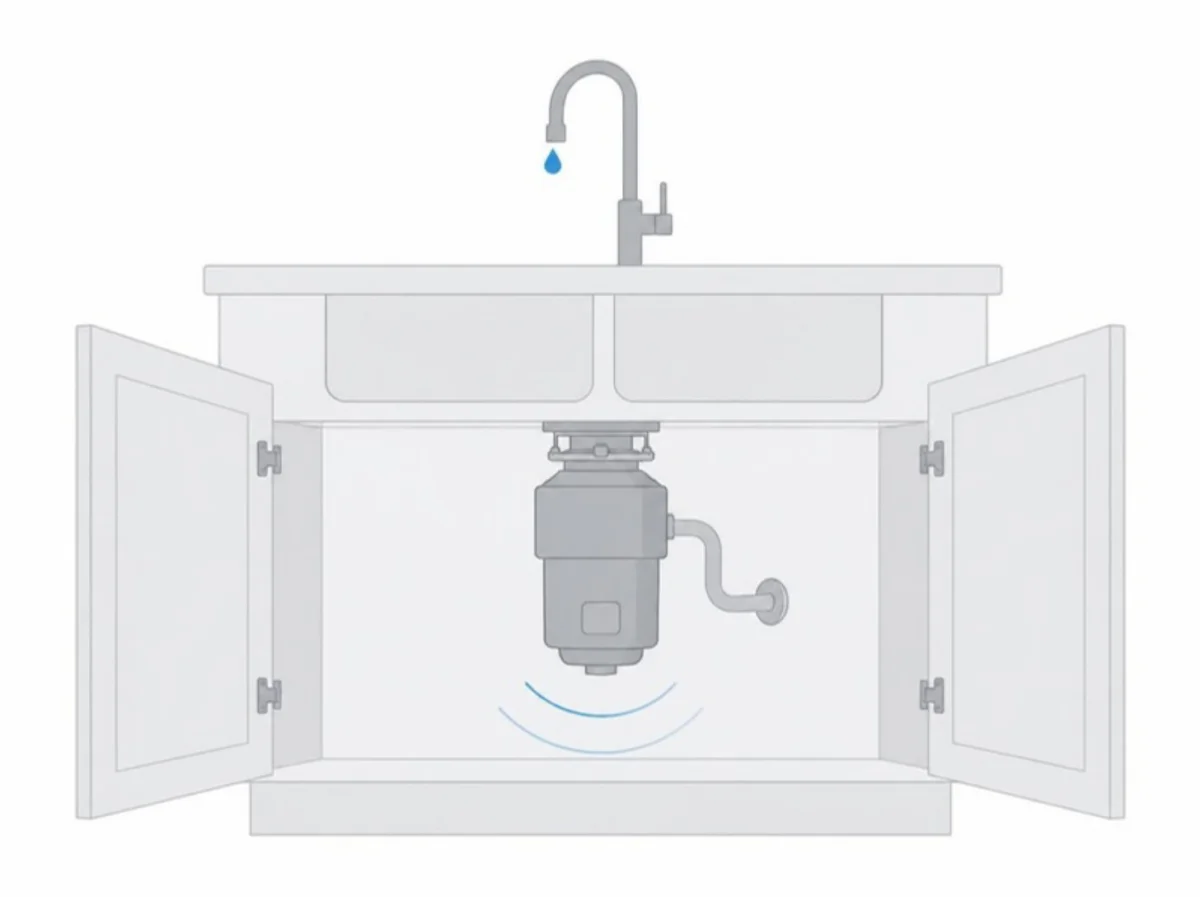
Drain noise depends heavily on where the RO drain line joins the sink pipe. APEC and GE both treat that connection as the place to make the gurgle quieter, and neither suggests changing anything inside the system.
APEC's RO-Hi owner's manual (maker PDF, copy hosted by Abt) sets the rule at installation: "To avoid possible drainage noise, mount drain line as low as possible on the vertical tailpiece, or on horizontal tailpiece." The manual says the drain saddle assembly "should be installed above the trap". APEC adds that pressure held inside the system forces the drain water out, so it does not rely on gravity to drain.
GE's fix works on a system already in place. Find the drain line adapter, a white plastic piece usually mounted between the sink drain and the P trap, run the RO faucet so the noise starts, then "Rotate/turn the drain adapter in the vertical axis." Keep turning it "to a position that minimizes the noise" and retighten the nuts. GE warns this may be too difficult for some people.
GE's owner's manual offers one more route for a drain that stays noisy: it says the drain line can go to an alternative drain, "such as a basement drain."
Why is my reverse osmosis humming?
A slight hum from a reverse osmosis system while water is dispensed is normal, says GE, "due to the pressure change inside the system as it begins processing more water." A hum that lasts is a separate case.
APEC gives a lasting hum its own troubleshooting entry, "RO Makes Humming Noise". Its explanation: "When RO makes a humming noise, most likely it's caused by air bubbles being trapped in the 'Check Valve' during installation." The manual marks that valve as point E on its Figure 17.
APEC's purge routine, in brief:
- Close the tank valve.
- Tilt the RO unit to the right, propping it under the third filter housing so it stays tilted.
- Open the RO faucet and let water run for about a minute, which sends air straight out of the spout instead of into the tank.
- Close the faucet for about 10 seconds and repeat step 3 three or four times, until water flows smoothly or the noise is gone.
- Open the tank valve and let the system run as usual.
If the hum is still there after a few days, APEC says there may be "air in your water source", or the check valve is "resonating with your water pressure and pipes". Its answer for that case is short: "a new Check Valve will solve the problem."
Why does my RO system whine?
A reverse osmosis system can whine for a few minutes the first time its tank fills. GE says that whine "should stop within a few minutes." A loud whine that continues is not in that category.
According to GE, "A loud whining noise can be caused by missing filters and/or membrane." No spare filters come with its systems, so GE asks owners to check that every filter and the membrane are properly installed after installation or after sanitizing.
Whistling, hissing and a high pitched squeal show up in searches about RO systems too. No manual or support page we read describes those sounds.
That includes the common claim that a hiss after the tank is full points to a failed automatic shut off valve.
High water pressure and a noisy air gap faucet
GE's owner's manual connects one faucet sound to supply pressure. Under "Sounds you may hear", its service chart lists drain water flowing through the faucet air gap, and notes: "This may be associated with high pressure water supply, generally 80 psi or greater."
GE's chart gives two fixes. The first is a pressure regulator in the house water supply "to reduce the pressure below 80 psi." The second is a high pressure flow restrictor from GE Parts, part number WS15X10049. This chart comes from a two page excerpt of the manual (GE document hosted by a retailer, Home Depot), and the excerpt does not show which GE models it covers.
For the drain side generally, the same chart wants no dips, loops or low spots in the drain line between the faucet air gap and the drain pipe. That row concerns water leaking from the air gap hole rather than noise, but it describes how GE expects the line to run.
Pumped and tankless RO systems
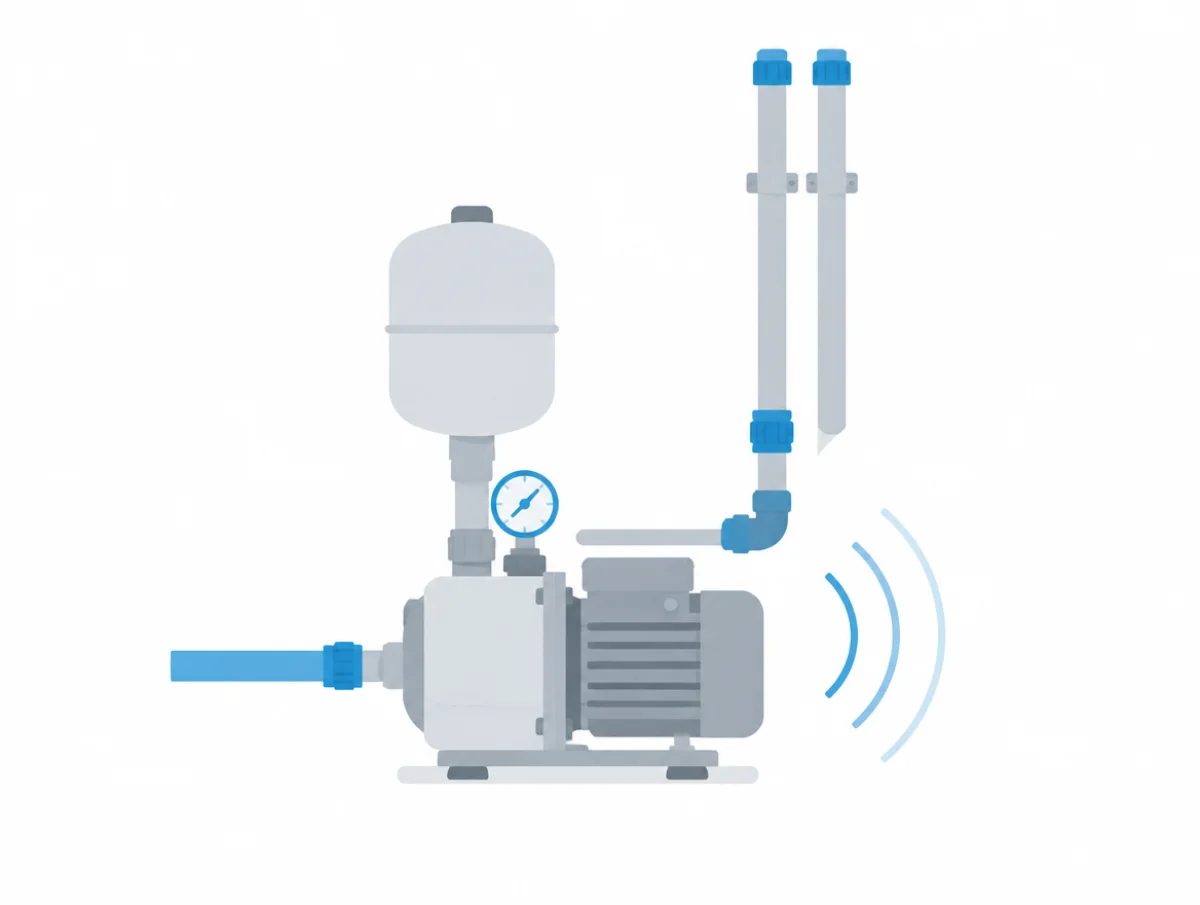
Some RO systems are fed by a booster pump, and that pump brings its own sounds. Booster pumps that feed RO filters are covered on our page about booster pump noises.
No maker document we found explains noise from a permeate pump. The same goes for the pumps and solenoid valves in tankless RO systems. Clicking from either is a common search, but there is nothing from a maker to quote on it.
When should you call for service?
Call for help when a newly installed RO system is loud. GE's abnormal list puts it in one line: "On new installations, a loud noise means it was probably installed wrong."
GE lists a phone line for its systems: the Innovations Team at 1-800-952-5039 (option 1), 8:00 AM to 6:00 PM Eastern, Monday through Friday.
Frizzlife sets the other stopping point. If an RO noise comes with leaking, visible damage, an electrical concern or behavior the manual does not call normal, it says to stop and use the model's instructions or technical support. It also cautions owners against forcing fittings, changing pressure settings or opening parts that are not part of routine maintenance.
Related guides and explainers
QuietSpecs has no buying guide for RO systems. The pumps that sometimes feed them are compared on our quietest booster pumps guide, and the RO drain usually shares a sink tailpiece with a disposal, covered on the quietest garbage disposals guide.
Sounds from the machines that share the water line have their own pages: water softener noises, garbage disposal noises and well pump noises.