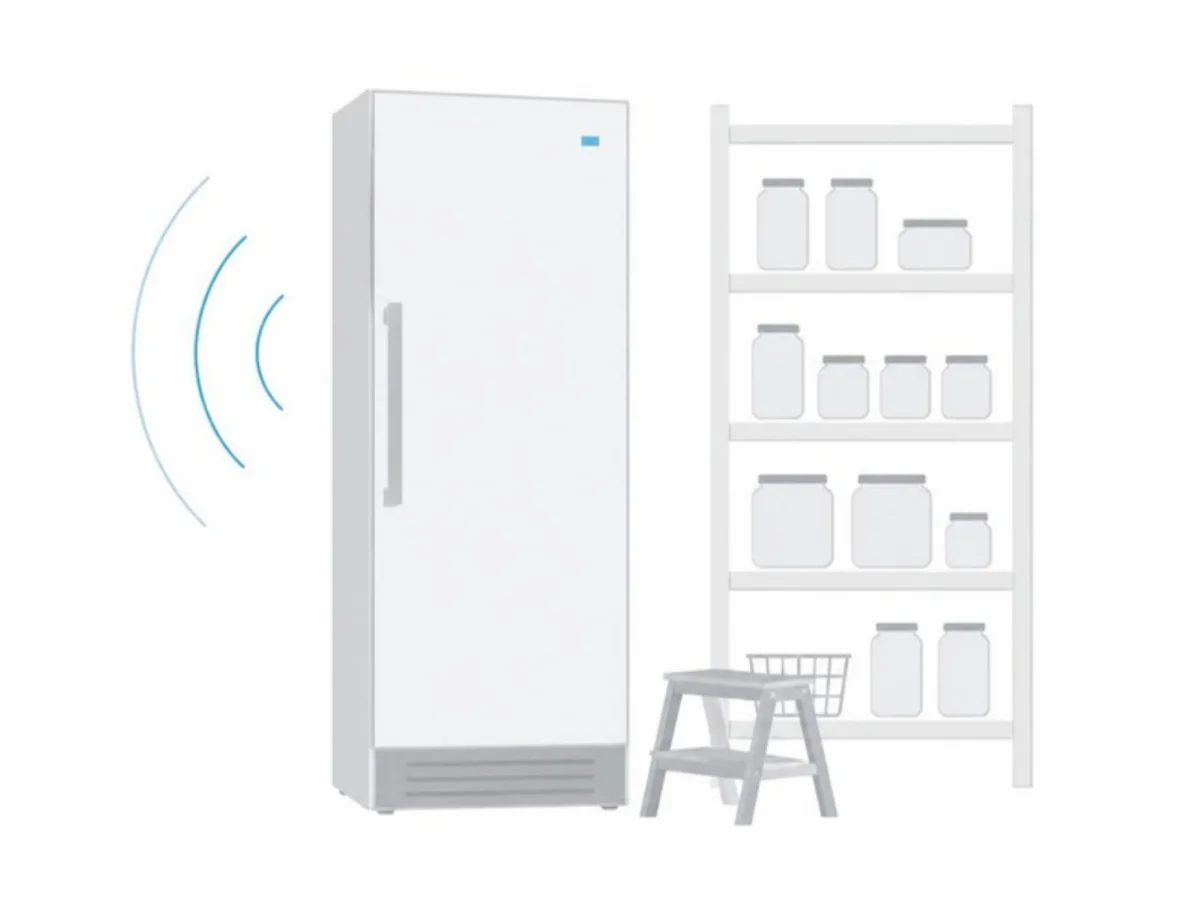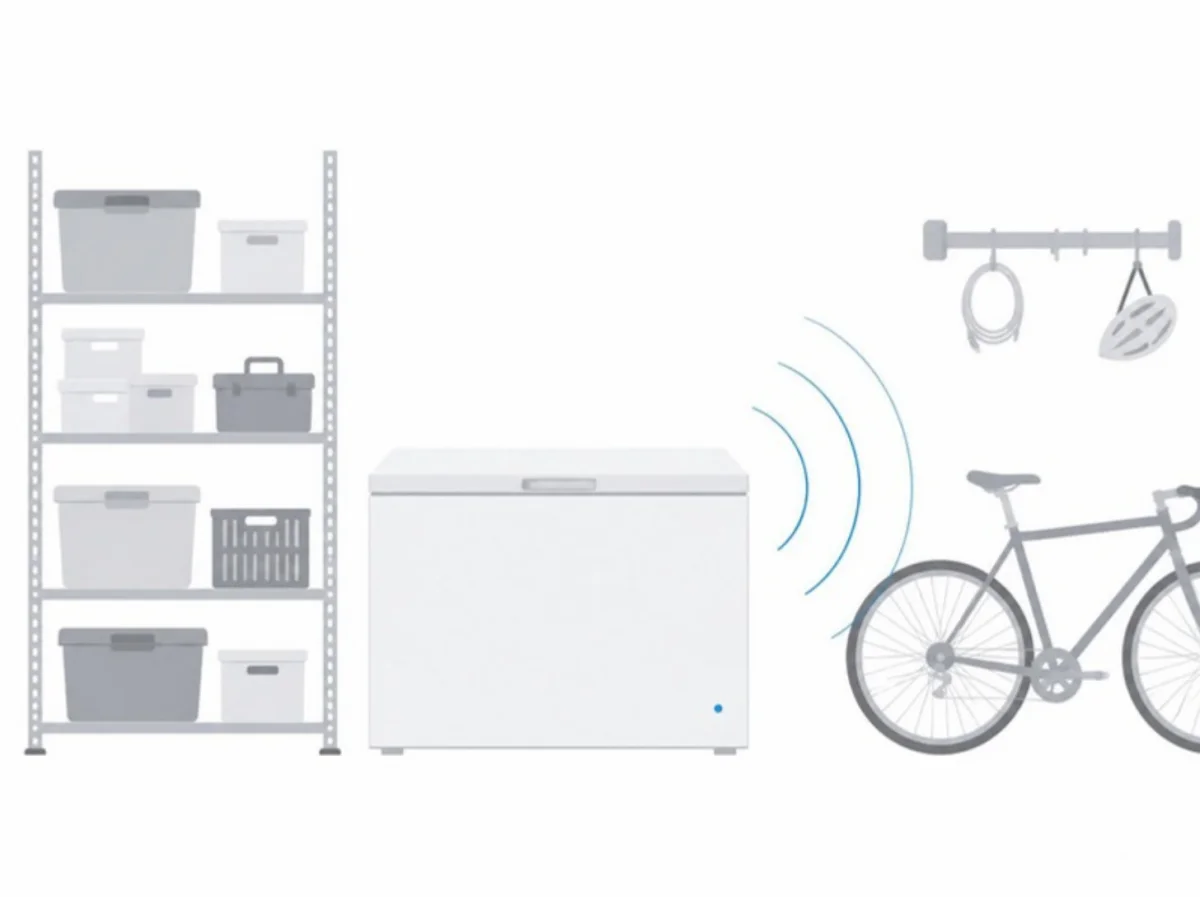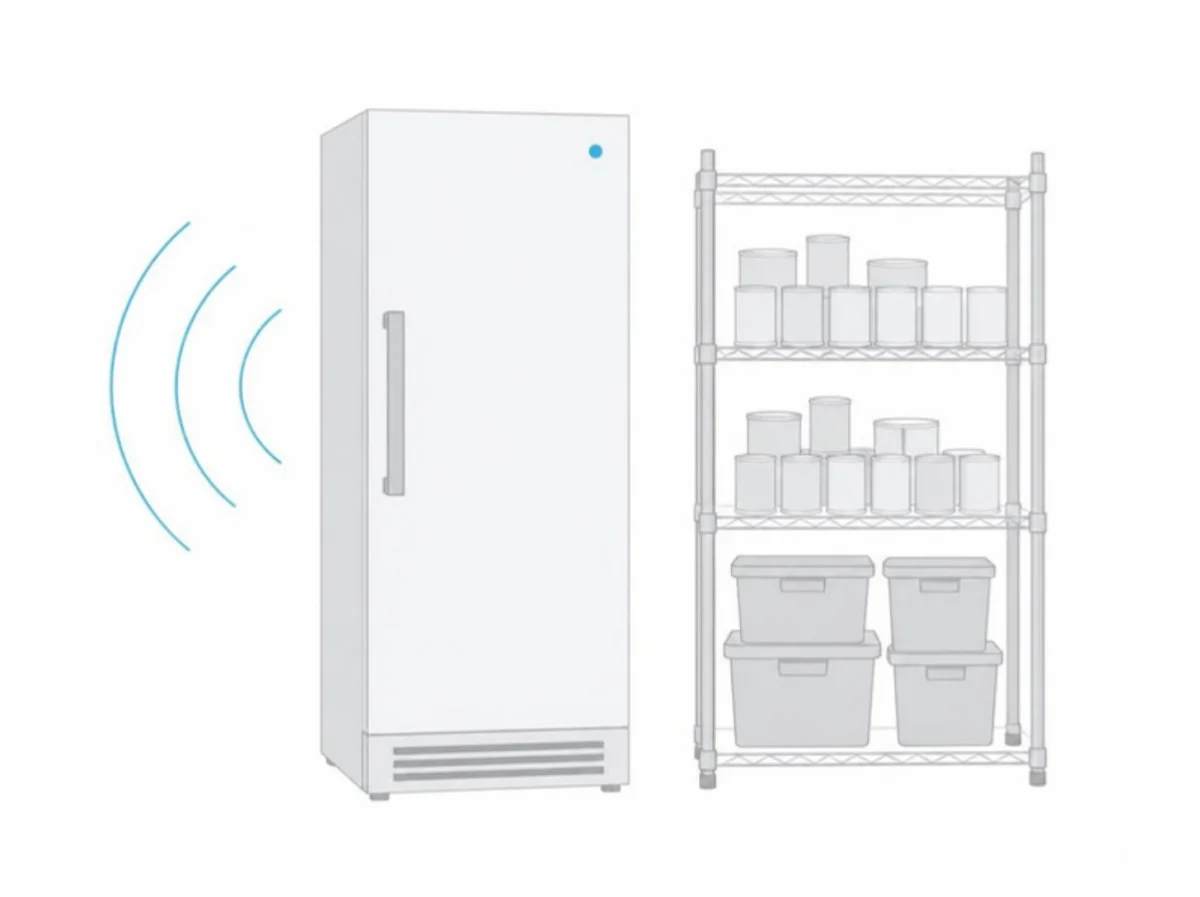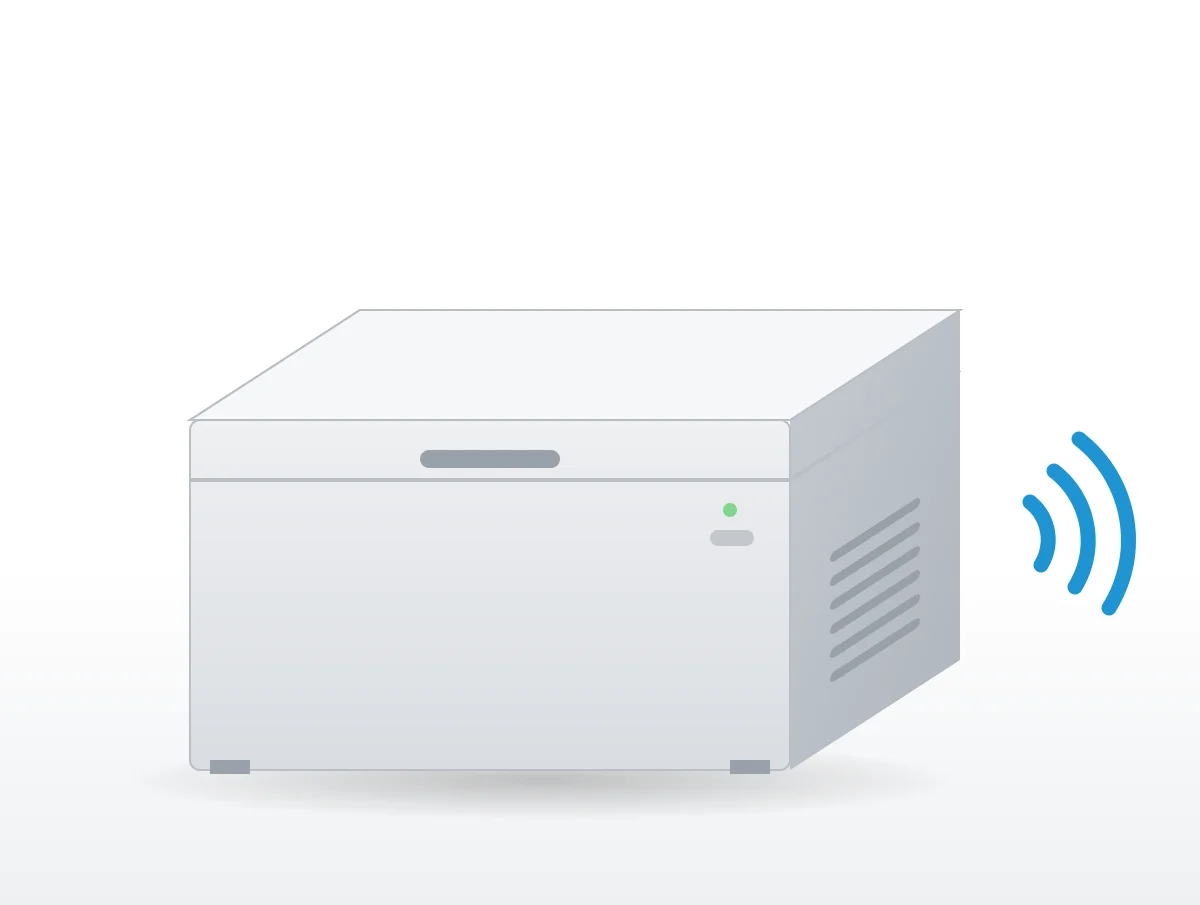
"Refrigerators and Freezers have compressors that are designed to run 80% to 90% of the time." That line from GE explains most of what a chest freezer in the garage or an upright in the basement sounds like: it is running nearly all day, and it gurgles, pops, hums and clicks while it does.
GE, Whirlpool, Frigidaire, Hisense, Midea and Danby each publish what a standalone freezer should sound like. The short list of sounds that point to a problem is a buzzer, a rattle that levelling does not cure, and any noise that arrives with food no longer frozen hard. Insignia, Arctic King and Kenmore publish no freezer noise guidance we could reach on their own sites, so they are not quoted.
Chest, deep and upright freezers that stand on their own are the subject here, while a fridge with a freezer compartment, an ice maker and a dispenser belongs to the refrigerator noises explainer instead.
A modern freezer runs most of the day
New freezers sound different from old ones, and GE says why: modern models need "a more powerful, higher speed compressor than the older model freezers", and other components bring sounds of their own. Its reassurance is that "once you get accustomed to the sounds of a modern freezer, it is no longer noticeable."
GE and Whirlpool both publish lists of freezer sounds they class as normal operation, from a hum to gurgles and pops. Neither puts a number on it. "We do not rate the sound level of our refrigerators or freezers," is GE's position.
What freezer sounds are normal?
Compressor hum, gurgling, popping and cracking, a click before the compressor starts, fan air on frost free models and a defrost sizzle all appear on the normal lists from GE, Whirlpool, Frigidaire, Hisense and Midea.
Compressor hum and a high whine
"Compressor running or whining" is on GE's list. A chest freezer can also make a "pulsating or high-pitched noise" that "may come from the compressor or fans as they adjust to optimize performance", and Whirlpool files that under part of normal operation.
GE's tip for a freezer that hums a lot? Fill it. "Placing more food in the freezer can dampen the noise and diminish the compressor's run time." The run time page gives the target: "The Freezer should be at least 3/4 full to maintain the proper temperature and reduce the run time."
Gurgling, boiling and moaning
That is refrigerant moving. GE groups "Boiling, gurgling, knocking, moaning, groaning, popping" as sounds that "occur while the freezer is cooling", and Danby's chest freezer manual calls the gurgle "completely normal" because the refrigerant changes "from a liquid to a gas and back again."
A chest has a second gurgle, on Whirlpool's account. It comes when the lid opens or closes, "due to water equalizing in the drain tube as air is forced through the tube", and it "is more common during time of high humidity."
Popping and cracking
Metal and plastic change size as they cool.
Popping when the compressor comes on is normal, according to Frigidaire, and "The sounds will level off or disappear entirely as your freezer continues to run".
Whirlpool puts the same sound down to "Contraction and expansion of the inside walls." Midea's upright manual answers unusual noises with two short lines, "Metal parts undergo expansion and contraction" and "This is normal."
A click before the compressor starts
The Hisense CFU14N6AWE manual lists a "Clicking noise before the compressor starts" as normal. Repeated clicks are another matter: not one of the six makers mentions a run of them on a standalone freezer, so no published rule covers it.
Whooshing and a stiff lid
Opening the door or lid lets warm air in and creates "a temporary vacuum", GE explains, so "You may hear a whooshing or air flow noise for up to one minute". It is "simply confirmation that the freezer is sealing tightly." The same pressure difference makes a chest lid hard to lift just after closing. Danby's manual promises "The pressure will equalize within a few minutes."
Frost free uprights add a fan and a defrost sizzle
A manual defrost chest has neither a freezer fan nor an automatic defrost cycle. Both make noise.
Hisense counts "Air movement noise from the small fan motor in the freezer compartment" and a "Popping noise during automatic defrosting" among its normal sounds. Sizzling, popping, crackling and hissing come from the automatic defrost cycle, GE adds, which "normally lasts between 30 and 40 minutes and can occur at various times of the day." The sizzle itself is "water dripping on to the defrost heater during the defrost cycle," in the explanation Whirlpool gives. A quiet spell before it is no fault either, because "It is normal that the freezer is not operating during the defrost cycle," per the Hisense manual.
Manual defrost models skip all of this. GE says they "should not experience these sounds except for the normal expansion and contraction of the freezer liner in which the condenser is located."
Condenser fan noise on an upright gets no mention on any of the freezer pages, although GE does list "Dirty condenser coils on models that do not have a NeverClean condenser" among the things that lengthen run time.
Why is my chest freezer buzzing?
Check the alarm before suspecting the machinery. Whirlpool and Frigidaire both fit a buzzer that sounds once the cabinet warms past a set point.
The Whirlpool alarm "sounds an audible buzzing alarm if the freezer temperature reaches 10°F (-12°C) or more above the normal for your selected temperature setting." A 3 position switch tests it, turns it on or turns it off, and the upright freezer page describes the same switch.
Some Frigidaire models buzz "if the freezer's temperature rises above 20˚F". Its advice is to turn the Temp-Alarm off until the temperature drops again, make sure the freezer is level, and check that the door "closes freely and with a proper seal."
Silence the buzzer by all means. Just read it as a warning about temperature. With no alarm fitted, the buzz is more likely the compressor hum GE lists as normal, and that needs nothing done.
Rattling starts with the floor and the wall
Levelling and wall contact come first for Frigidaire, Whirlpool, Midea and Hisense alike, then whatever sits on or in the cabinet.
If the freezer "rocks on the floor when it is moved slightly", Frigidaire wants it levelled "by adjusting the leveling legs or by using wooden shims", and a check that "the floor can adequately support your freezer." A little movement inside is expected: "It is normal for items inside the freezer to vibrate somewhat."
Whirlpool's list adds "Items are stored on top of the freezer" and points out that "the floor where the refrigerator is located should also be level". For "unusual noises or vibrations", Midea's answer is to adjust the front feet and, if the cabinet touches a wall, "Move the freezer away from the wall."
The Midea manual describes the method in detail. Set a carpenter's level on top of the cabinet, have someone push on the top front to take weight off the feet, and turn the two front feet until the bubble reads level. Hisense's rollers, by contrast, "are not castors" and should move the cabinet only forward or backward.
A lid that grinds or squeaks is its own case. Whirlpool says to check that it was installed properly and is not rubbing on cabinets, and that the freezer is level.
Why is my freezer making noise and not freezing?
Hum, fans and gurgling from a warm cabinet "are all signs the unit is attempting to cool," in Frigidaire's phrase. Give it 24 hours. If it is still not cold, schedule service.
Before that, the checklist runs through a dedicated grounded outlet, a tripped GFI, a door left open, a weak seal tested with a dollar bill, frost that stops the door shutting, and a cabinet so full that food blocks the vents. After a power cut or a fresh install, "The unit will need 24 hours for the temperature to stabilize".
Danby's chest manual pairs a warm cabinet with a constantly running one and gives the reasons together. A setting too warm or too cold, a lid left open, a big load of warm food, sun or a nearby heat source, and very high ambient temperature or humidity can each cause it. Midea, for its part, asks owners to "Allow 4 hours for the freezer to cool completely before adding food" after the freezer has been switched off.
A freezer is loudest just after a defrost
A freezer restarting after a manual defrost is warm and empty, so it runs hard while the walls cool, and the walls pop and crack as they contract.
Whirlpool's wording is that they may pop or crack "especially as the refrigerator cools down for the first time or defrosts." GE counts "An empty or lightly-loaded Freezer" among the causes of long run time. Hisense says the motor runs more "After installing the appliance or it has been switched off for a long time."
Danby's schedule is to defrost its chest freezers "twice a year or when roughly a 1/4 inch layer of frost has formed on the cabinet walls". Once the cabinet is cold, putting the frozen food back gives the compressor the full load that GE says shortens its runs.
Garages and cold rooms
Heat makes a freezer run longer.
In "an extremely hot, humid area" or a heat wave, GE warns, "the run time may approach 100%." Danby and Hisense both list a hot room among the reasons a freezer runs continuously, and Danby's fix is to "move the freezer to another area".
Cold carries a different risk: "Extreme cold ambient temperatures can cause the freezer to perform improperly," reads the Danby manual, and Midea's says "Extremely cold temperatures may also prevent the freezer from performing properly."
How cold is too cold depends on whose manual you hold. Danby rates its chest freezers "from -17 to 43°C / 0 to 110°F" but "not designed for outside installation, including anywhere that is not temperature controlled." Frigidaire's not freezing page, written for freezers and fridge freezers alike, says "We do not recommend installing the unit where the temperature will drop below 55°F." The range printed in your own manual is the one to follow.
How a freezer's vibration travels through a basement floor into the rooms above is covered on the quiet basement page.
When a freezer noise needs service
Three things send owners to service: a freezer still warm after 24 hours of running, controls showing a sensor fault, or a noise that survives every fix on the lists.
The 24 hour rule is Frigidaire's, which also asks that units "installed within the past 30 days" go back to the installer first. Midea's upright manual says "Call for service" when its indicators flash for a temperature, defrost or ambient sensor failure. Every one of Whirlpool's freezer noise pages ends with "Still need help? Contact us or schedule service."
No home repair for a compressor or fan motor appears in any of these documents, and no maker sets a decibel limit for a healthy freezer. A freezer that used to be quiet and has grown louder may fit one of the patterns in why appliances get louder.
Published noise figures are few
GE does not rate its freezers at all, Danby gives one range covering all its fridges and freezers, and the makers that do print a figure never say how it was measured.
The quietest freezers guide found published figures from 39 dBA to 47 dB(A). Among chests, the quietest chest freezers guide lists Hisense's 5.0 cu ft WFC050M6XWD at 40 dB and Element's chests at 42 to 48 dB. Among uprights, the quietest upright freezers guide has Summit's FS605 at 32.8 dB and UF22W at 32.4 dB.
Different makers measured in ways they do not print, so read the note on comparing decibel ratings before weighing one brand against another. A low figure still comes with every normal sound above.