RectorSeal, which makes condensate pumps, blames the commonest pump noise on a switch: a fixed speed pump on a mechanical float "turns on at full speed and shuts off just as abruptly", and that cycling "creates audible clicking, humming, or vibration." Most of the other sounds come from the discharge line, where air or a siphon makes the pump gurgle, or from whatever the pump is screwed to.
The pump's job is lifting water from an AC coil, a condensing furnace or a mini split head to a drain that gravity cannot reach. Little Giant, Sauermann, Hartell, DiversiTech, Beckett and RectorSeal all publish manuals or support articles on fitting and servicing them, and between them they cover clicking, humming, gurgling, a pump that never stops, and the point where the answer is a new pump.
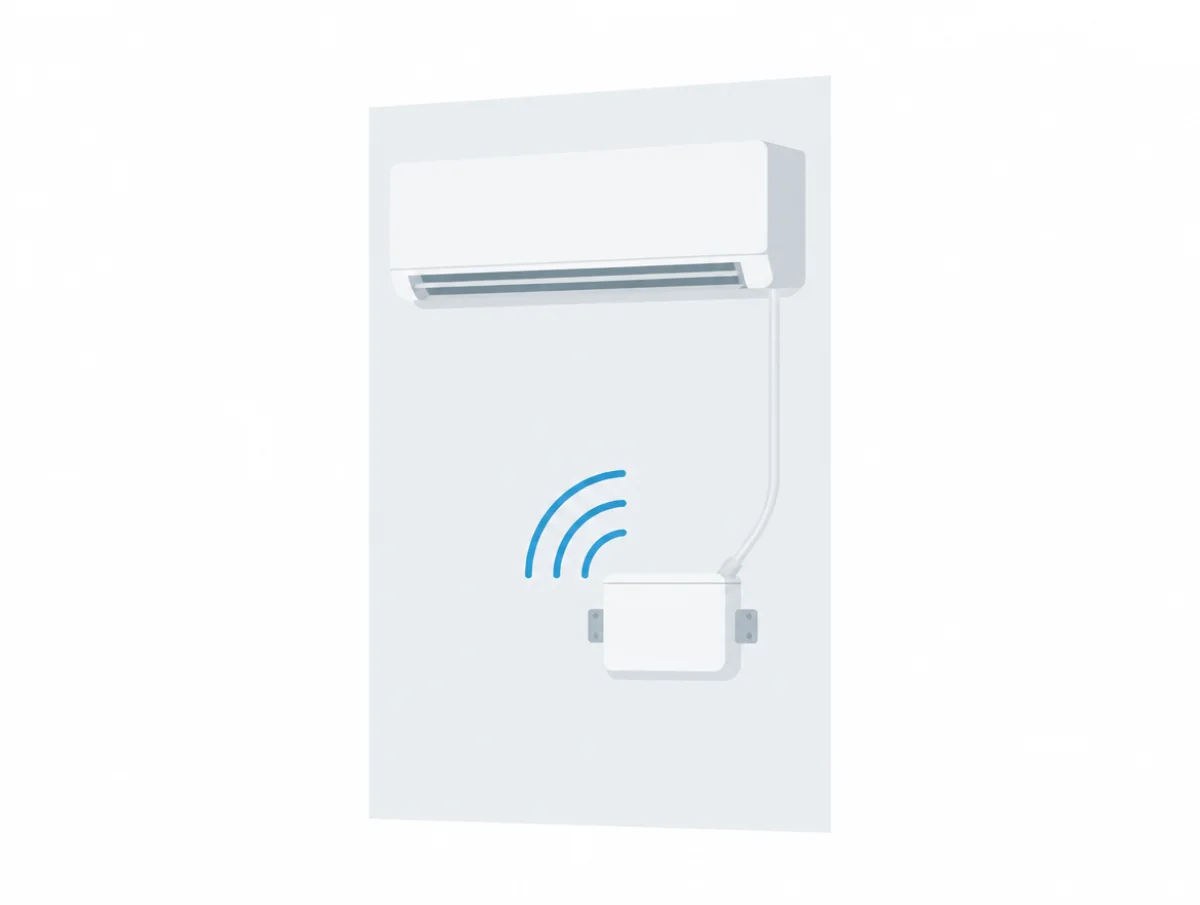
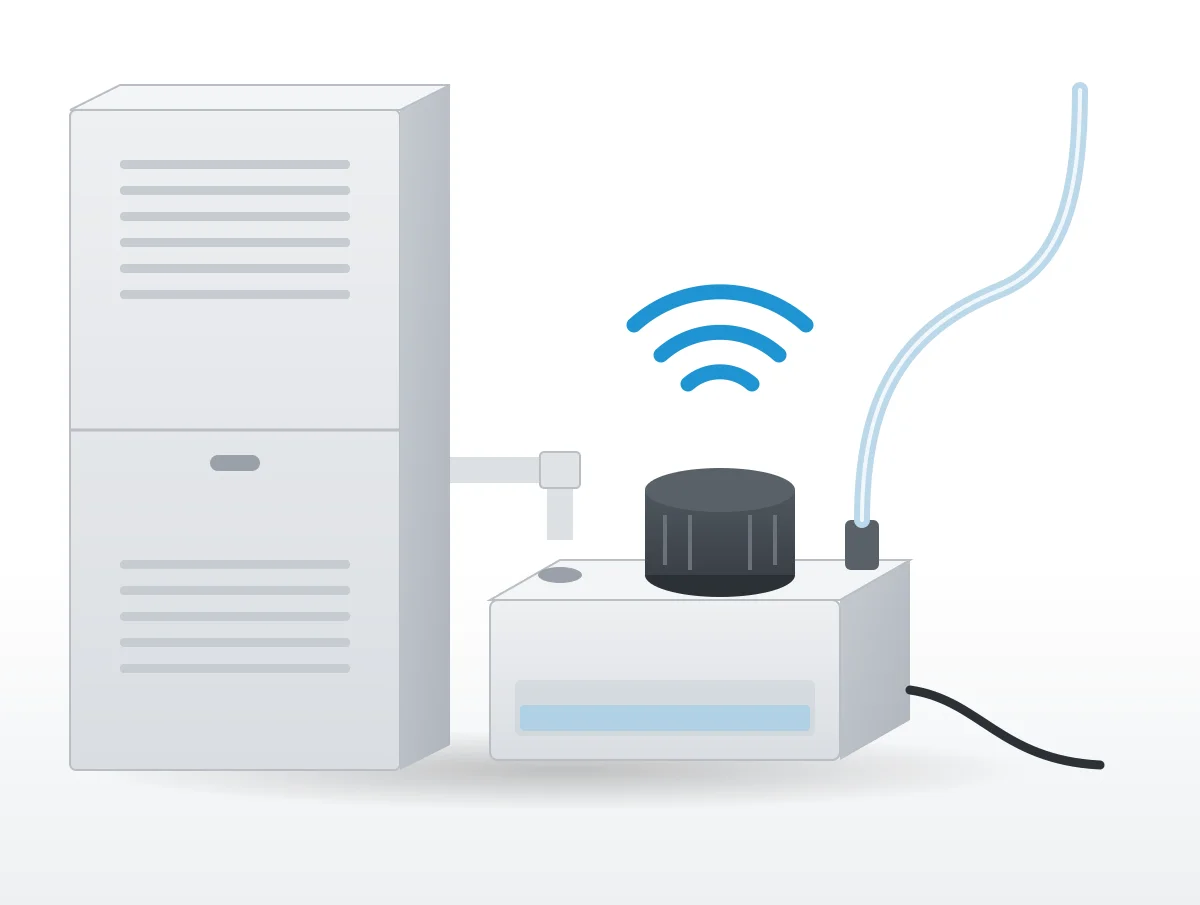
RectorSeal sells the Ghost mini pumps and formerly the Aspen line. Its advice therefore covers the small pumps fitted to mini splits as well as larger tank pumps.
A short burst each time the tank empties
Some noise comes with every cycle. Hartell's A2X-1965 manual describes it: "Water is collected in the reservoir and pumped out when the float raises to a pre-set point. As the water level goes down the float turns off the motor at another pre-set point." Between those two points the pump is silent.
Placement changes how much that burst bothers anyone. Mini split pumps "are often installed in noise-sensitive areas such as bedrooms, offices, and living spaces", RectorSeal points out, unlike "traditional HVAC equipment located in attics, basements, or garages". The same few seconds of sound reach people far more often.
Loud pumps are usually shaking a wall
When a condensate pump is loud, the wall, framing or pipe it touches is often doing the amplifying. "Improper mounting or direct contact with framing, drywall, or line sets allows vibration to transfer into the structure, amplifying noise throughout the room."
That RectorSeal article wants "the pump is secured correctly and isolated from rigid surfaces", and adds that "vibration-dampening material may reduce noise." DiversiTech builds this into the ClearVue IQP-120, which stands on "sound dampening and antivibration soft rubber feet". Little Giant's instruction is to "Support pump and piping when assembling and when installed", and skipping that can cause "motor bearing failures."
Age is the other cause on RectorSeal's list: "Over time, internal components can loosen or degrade, resulting in increased noise levels even if the pump was quiet when initially installed." Owners of Hartell's A2X-1965 are asked to oil the motor bearings "every six months with S.A.E. 20". That applies to that model, a commercial grade pump whose manual we used because Hartell's residential pump pages did not give us one to read, and not to sealed pumps.
Debris in the impeller housing
Grit or slime in the impeller housing can leave a pump running without moving water. Little Giant's table has "Pump impeller is not turning", fixed by "Clear any blockage in the impeller housing." Hartell's discharge port on the impeller chamber "may be clogged due to an accumulation of debris", and the manual walks through taking it apart to clean.
Why is my condensate pump gurgling?
Air moving through the lines, or a siphon pulling water out of the pump after it stops. RectorSeal names "Air in the drain line, poor slope, or restricted piping" as causes of surging, short cycling and extra noise.
The siphon comes from the discharge route. A hose that climbs above the pump and then falls below it will siphon, and RectorSeal's installation article (reprinted from the RSES Journal of October 2013) spells out the result: "A siphon can also raise the decibel level of pump operation or restrict proper draining that sets the stage for an eventual overflow."
The remedy there is an air break, a small anti-siphon fitting in the 1/4 inch discharge hose. It stops the pump emptying itself after it switches off, which "eliminates the potential of excessive noise, ineffective operation and overheating." Sauermann's Si-30 instructions cover it in one line: "Ensure that there is no syphon effect on the discharge tube."
Tank pumps that want a siphon
Little Giant's VCMA tank pump manual goes the other way. Run the discharge up, slope it down slightly, then take it down to a drain "below or approximately level with the bottom of the pump", because "This will produce a siphoning effect which will improve efficiency of the pump." Where the line cannot slope down, "make an inverted 'U' trap directly above the pump at the highest point."
Hartell's A2X-1965 manual routes it almost identically. The small mini split pumps Sauermann and RectorSeal describe are built to avoid a siphon; the bigger tank pumps in Little Giant's and Hartell's manuals are not. Follow the manual for the pump you own.
Gurgling on the inlet side
The pipe from the coil into the pump can carry air as well as water. "It may be desirable to use a 'p' or 'U' trap between the AC unit and the pump to provide a liquid barrier to air flow from the air conditioner," DiversiTech suggests. Gurgles from the head's own drain hose, before any pump, belong in our mini split noises explainer.
Clicks come from the float switch
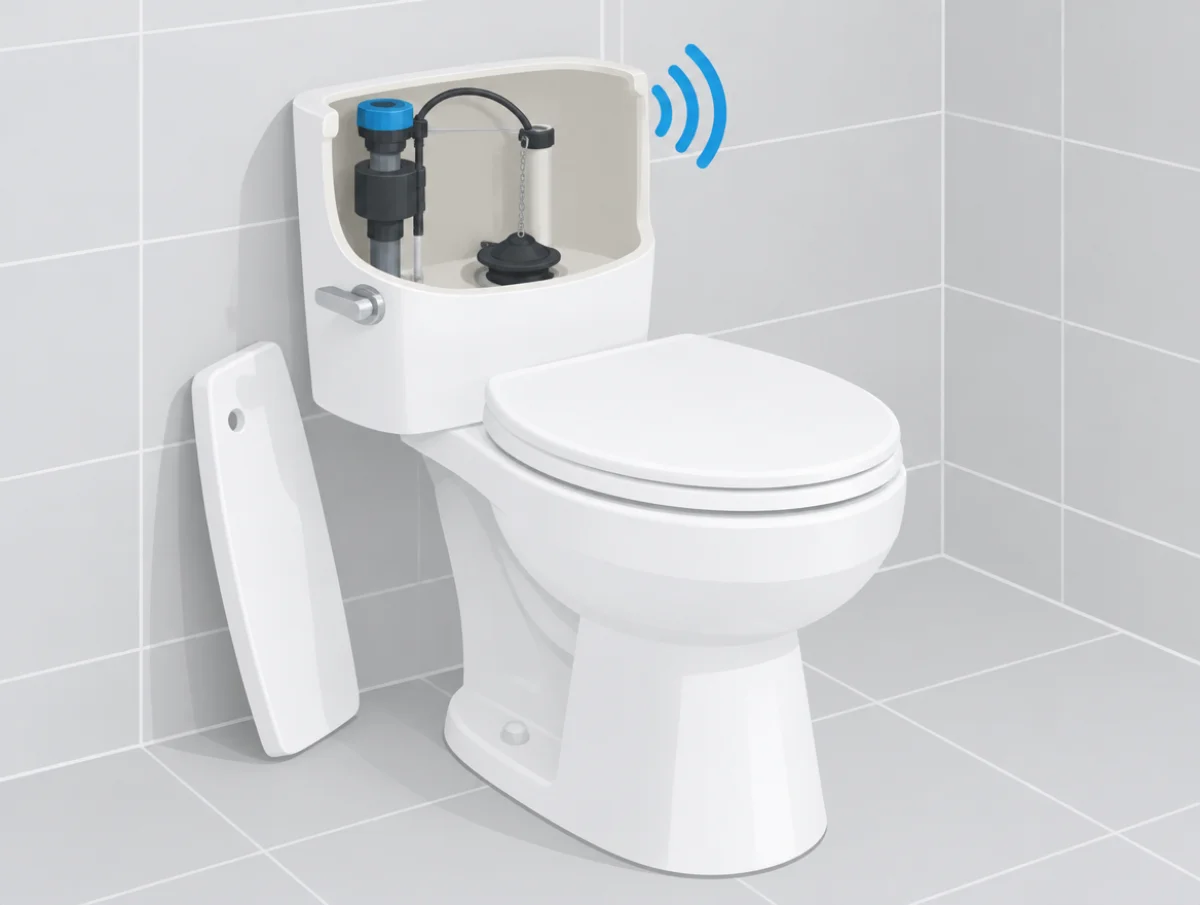
That click is normally the float switch closing to start the motor or opening to stop it, the same mechanical switch RectorSeal ties to "clicking, humming, or vibration".
Clicking without pumping is another sign. Beckett's troubleshooting for its BK17 and BK22 pumps includes making sure the "MAIN SWITCH" and "SAFETY SWITCH" are "fully 'snapped' into their mounts", then lifting the test tab to check that the main switch and motor work.
Floats stick. "A dirty float could be too heavy to operate correctly," according to Little Giant, and Hartell's float "may be stuck due to dirt or algae formation." DiversiTech's ClearVue senses water instead of floating on it, which the company says means "no more stuck floats."
Beeps from a pump with an alarm
Some pumps beep on purpose. The ClearVue plays "an audible startup tone" at power-up, and its high water alarm, off by default, can be set to sound. Installers are told to have homeowners "listen for an alarm tone (if enabled) if they think that there is system trouble."
Why is my condensate pump running constantly?
It is losing to the water coming in, or the water it pumps out is draining back. Little Giant lists "Liquid inflow matches or exceeds pump output capacity" with the fix "Larger pump required", and "Check valve leaking" for nonstop cycling.
Sauermann's Si-30 and Si-33 instructions put a time on it. "If the pump is running continuously (>1min)", check that the discharge height is under 10 m, that the pump suits the capacity of the air conditioner, and that water was not poured in too fast during testing. For a pump that "cycles continually or does not shut off", the steps are to check that the detection unit is mounted level, then "turn the pump off and check water doesn't return down the discharge line." If water comes back, "you should change the pump." A pump that runs but moves no water may have a loose or leaky suction hose.
A pump that runs on purpose
DiversiTech's ClearVue runs extra cycles by design. It enters "a routine cleaning cycle" that "pulses water in the drain line and agitates the water in the tank". During a high water alarm it shuts the cooling down but "continues running to try and clear the clogged drain line", pulsing water "for a couple minutes."
The check valve
The check valve stops pumped water flowing back into the tank. A leaking or stuck one shows up as nonstop cycling, or as a pump that hums without emptying, and Little Giant lists "Check valve stuck or plugged" under four separate problems.
Chatter or rattle from a check valve is one sound that no manual or article in our sources explains, and we have not borrowed an answer from forums or repair sites. Cleaning is covered. Little Giant says to "Remove the check valve and backwash the discharge port into the volute over a sink", and to clean the valve "with warm water and mild soap if necessary."
Hartell is particular about the type on its A2X-1965: a check valve "is required and should be of a soft seat swing check design", with a spring loaded ball check allowed only within stated limits. Beckett sells a check valve replacement kit for its BK pumps, instructions included.
Running dry
Not for long. The Si-30 "must not run dry", per Sauermann, and RectorSeal explains why: "Water is necessary to lubricate and cool the pump and a small amount must stay inside the pump for it to operate reliably."
This is the reason RectorSeal links siphons to overheating as well as noise, since a siphon can empty the pump body after each cycle. Sauermann fits the Si-30 with a self resetting thermal cut out at 115°C (239°F).
DiversiTech plays by different rules. The ClearVue motor "can be tested in a partially full or 'dry' condition by pressing the 'Drain' Button", and the air cooled pump "may be operated continuously as long as the air vents are not covered." Read your own manual before assuming either rule.
Furnace condensate pumps
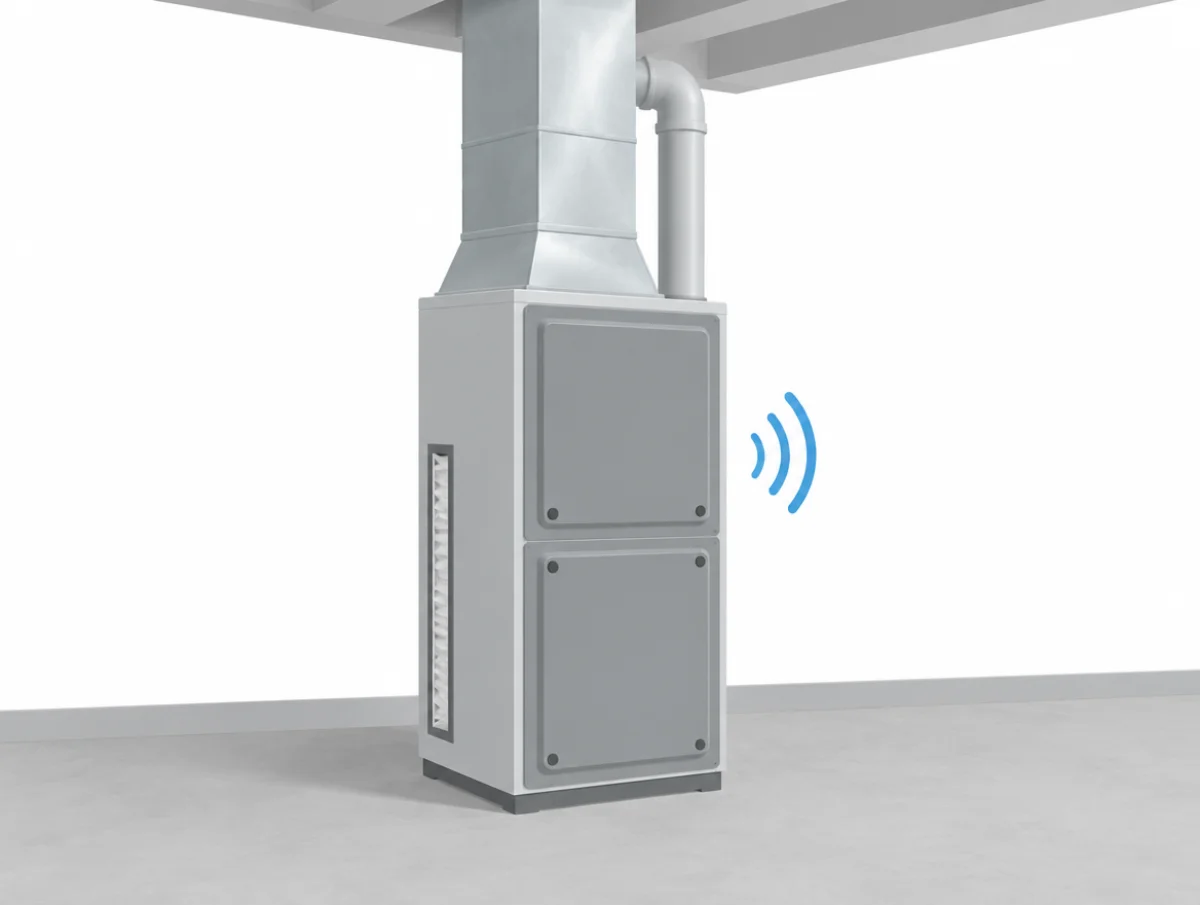
Same float, siphon and vibration noises as a pump under an AC coil. Little Giant and Hartell both sell their tank pumps for condensing furnaces as well as air conditioner coils, with one maintenance routine for both.
Furnace condensate is acidic, though. In "a gas furnace environment, care must be taken to ensure acidity of condensate does not fall below the average pH of 3.4", Little Giant writes, and the way to do that is by "routinely cleaning or flushing tank with fresh water" so the tank does not pit.
Two wiring rules affect how often the pump runs. Little Giant wants "a constant source of power" and says "Do not connect to a fan or any device that runs intermittently." Hartell's version reads "not an intermittent source such as a fan or limit control circuit." Bangs, whooshes and squeals from the furnace itself are in the furnace noises explainer.
Why is my mini split condensate pump noisy?
Partly location, since it sits inside or right beside a bedroom head, and partly design. Piston pumps "tend to generate more noise, especially at higher flow rates."
RectorSeal calls choosing the wrong pump the most common installation mistake, especially "choosing a large wall-mounted pump instead of a small, quiet and concealable mini-pump." A wall-mounted pump of that kind "brings the operating noise of an oversized pump into the occupied space."
Troubleshooting goes in order. Confirm the noise really is the pump, "not refrigerant expansion, fan operation, or line-set movement", then check mounting, then drainage. The head makers' explanations of refrigerant and drain sounds are in our mini split noises explainer. And one warning from Sauermann: "Before you start cleaning your air conditioning system, you must remove the pump to prevent damage."
Cleaning the reservoir
Little Giant's VCMA routine, after unplugging, goes like this. Remove the cover and make sure "the floats move freely". Backwash the discharge port, clean the tank and flush it with fresh water. Check the inlet and outlet piping for kinks, clean the check valve, and test the system. The inspection is due "every 6 months (more frequently in heavy-use applications)."
Hartell, Beckett and DiversiTech describe close versions. A Beckett pump in "a dirty environment or is pumping other than clear, condensate water" should have its tank cleaned "every 6-12 months" with soap and water. For "extreme algae formation", Hartell suggests a commercially available algaecide, dumped out and rinsed after the waiting period.
The Si-30 has a detection unit in place of a tank, and it "must be cleaned at the beginning of the season and regularly if the system is used all year round." The ClearVue drains its own tank at season end to limit algae.
When to replace the pump or call a technician
"Replace pump." Those two words are Little Giant's corrective action for both a "Defective switch" and a "Defective motor".
Water flowing back down the discharge line after the pump stops is Sauermann's signal to change it. A stuck ClearVue motor means "Contact the manufacturer. There are no user serviceable parts." When isolation, drainage and mounting fixes fail, RectorSeal concludes "the problem is likely due to the pump's design", particularly with "fixed-speed or piston-driven pumps."
The makers want professionals involved. Little Giant's pump "should be installed and serviced by technically qualified personnel", with a warning: "Do not allow the tank to overflow during this maintenance." Beckett tells owners to "consult your local HVAC service professional" and limits its own customer service to "basic support." Beckett's site blocked automated reading, so its article is quoted from the Internet Archive's copy of Beckett's page dated November 15, 2025.
How loud is a condensate pump?
Mini split pumps in our condensate pump guide carry printed figures of 16 to 34 dB(A), all but one at 23 or below. No large tank pump we checked printed a figure we could rank, which leaves furnace pumps without a comparable number.
Only Sauermann names a test standard, so the quietest condensate pumps guide ranks the figures in separate groups. Sauermann's in application figures run 2 to 3 decibels above its bench figures, the mounting effect described above in numbers.
For the cooling system around the pump, see the quietest mini splits and the central AC noises explainer. Dehumidifiers often drain through a pump too, and their sounds are covered in dehumidifier noises.