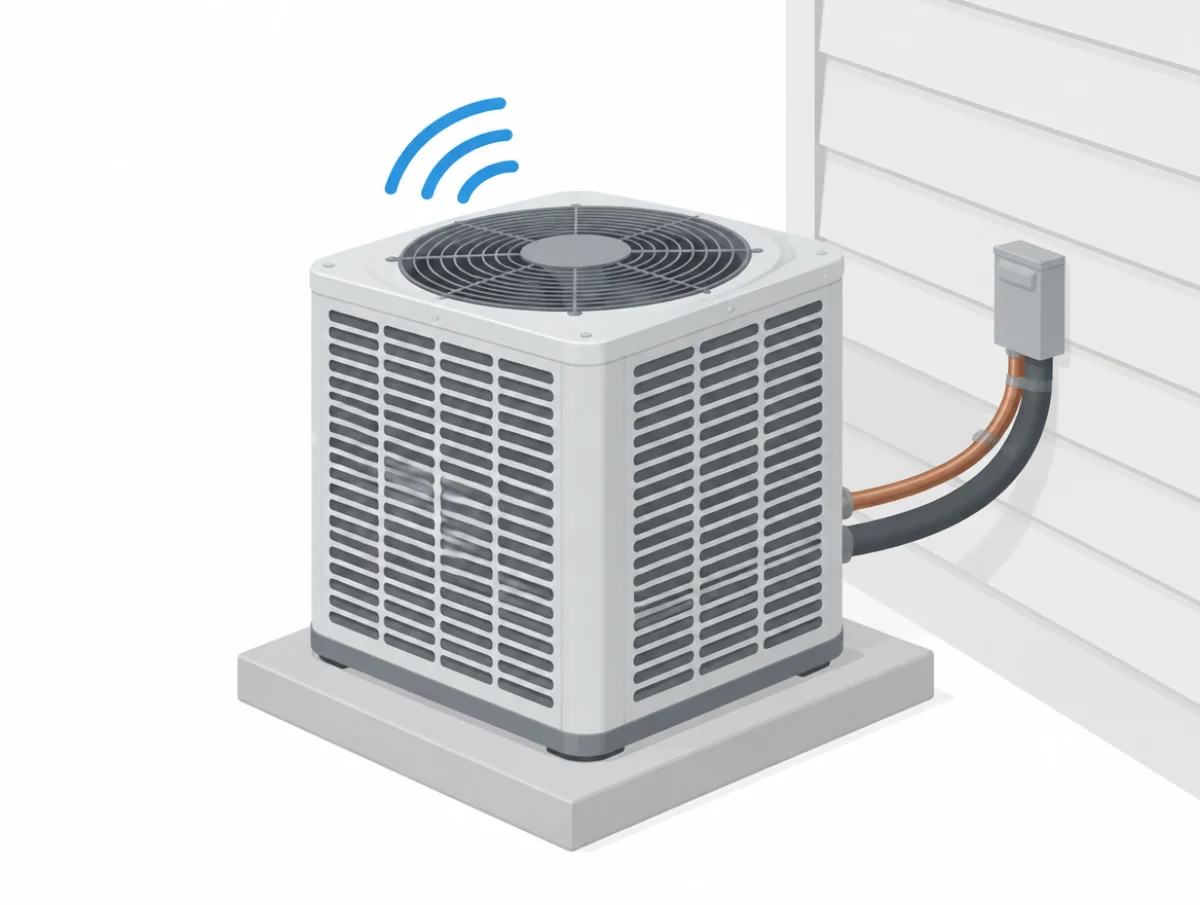
The low hum from the condenser is supposed to be there. "Some units are designed to have quiet operations, but there should still be a low hum," Lennox writes of the outdoor unit, and Trane counts "the whir of the outdoor unit" among the sounds owners get used to. What the makers treat as trouble is a change: buzzing while the fan sits still, rattling, screeching, grinding, hissing, or a loud noise the unit never used to make.
The buzz with a motionless fan is the complaint they describe most, and it usually comes down to one part, the capacitor. Most of the other sounds lead to the fan, to loose hardware or to the compressor. Nearly all of them end in the same instruction: switch the system off and call someone.
This page covers split central air, meaning an outdoor condenser plus an indoor coil on a furnace or air handler. The causes and instructions are quoted from homeowner pages, installation instructions and a service manual published by Carrier, Bryant, Trane, American Standard, Lennox, Goodman, Amana, Daikin, Rheem and Ruud. Other systems have pages of their own: heat pump noise, mini split noises, window AC noises and furnace noises.
A steady hum is normal, a change in it is not
Trane's noises and smells article puts normal startup and shutdown sounds next to the whir. American Standard is blunter about the compressor: "compressors are noisy by nature". The same page warns that one "making loud or unusual noises" may be worn out.
Goodman and Amana, both Daikin brands, draw the line where the sound changes. When a part stops doing its job, "an air conditioner's hum may turn into a buzzing roar, rattle or screech", according to Goodman's learning center. Amana's version ends in "clatter or squeal". Both treat a significant change in sound as a possible cue to call a licensed dealer.
Trane reduces it to one rule: "If your normally quiet indoor or outdoor unit suddenly starts making a loud noise, shut the system off and call for HVAC repair."
Why is my outside AC unit loud when it starts or stops?
Some are built that way. "Some brands of heat pumps and air conditioners are naturally loud when starting and stopping. There are kits to help reduce the noise. However, if this issue just started for you, there may be a problem with the capacitor or compressor." That is Trane's whole answer, and Kimberly Sexton, a senior systems engineer there, repeats it on the same page: "Some outdoor units are designed with a strong startup or shutdown sound, but changes in those sounds are important." Which kits, Trane never says.
Single-speed compressors account for the burst at switch-on. They "only run at full power, so when they turn on, you often hear a loud burst of noise, sometimes called a compressor hard-start," according to Daikin. Because they cycle on and off over and over, the pattern "can create ongoing noise."
Two-stage and variable speed systems spend longer at low speed. By Goodman's account, that "may also reduce the ON/OFF noise when compared to a single stage unit because it cycles less often." What makers publish on the subject is collected in inverter compressors and noise.
A whistle as the unit shuts down
Carrier's service manual for residential air conditioners and heat pumps is a technician's document, but it explains one shutdown sound that owners do hear: "A whistle on shut down could indicate a partial leak path as refrigerant is equalizing from high to low side."
Some scroll compressors carry a device "to efficiently minimize the shut down sound," the manual adds. It stops the scrolls from running backwards while the pressures even out.
Buzzing or a loud hum points to an electrical part outdoors
The usual suspects are a failing capacitor, a bad contactor, or a fan motor that will not get started. Trane's answer for a loud hum outside: "it could be an issue with the capacitor, contactor, or fan motor, or something else. Your best course of action is to call for HVAC repair." Indoors, the same page blames a loud hum on the blower motor.
Why is my AC humming but the fan is not spinning?
Nearly always the capacitor. "If your AC fan is not spinning but making a humming noise, the capacitor has likely failed," reads Carrier's fan page, and Bryant describes the same scene: "a humming or buzzing sound coming from the outdoor unit, but the fan blades remain stationary."
What you hear is the motor straining. On Carrier's capacitor page, a distinct hum "usually indicates a motor trying to start but lacking the necessary torque from the capacitor." Lennox pictures the condenser fan "trying to spin without power from the capacitor." Trane's fan troubleshooting page adds a variant in which the system "starts but makes a low humming sound, shuts down, or does not blow cold air", and rules out swapping the run capacitor yourself "Because these have an electrical charge".
Switch it off. Carrier wants the system shut down "since operating the AC without a functioning condenser fan can cause the compressor to overheat and potentially lead to more expensive damage."
Then there is the stick. Carrier and Bryant both bring up nudging the fan blade to get it turning, and they land on opposite sides. Carrier offers it, "(carefully!)", as a way to recognize a capacitor fault. Bryant calls the trick "highly discouraged" and "dangerous", and says it can burn out the motor. We side with Bryant, so leave the blade alone.
The contactor can buzz too
The contactor is the switch that sends power to the outdoor unit when the thermostat calls for cooling. Arcing "which burns and pits the connections" wears contactors out, and so do insects and debris that get into the mechanism. Bryant's summary of the result: "A failed contactor can cause buzzing, intermittent operation, or prevent the outdoor unit from starting." Carrier's parts guide gives the same three symptoms in fewer words: "AC won't start, buzzing, intermittent operation".
What to do about buzzing
Turn the system off and call for service. Carrier groups buzzing with two other signs: "if you hear buzzing noises, smell burning odors, or see ice on the coils, shut the system off and call for service immediately."
Bryant's troubleshooting page files buzzing, grinding and hissing as "warning signs of a potential mechanical or refrigerant issue" and wants a qualified professional on the job. It also explains why hands stay out: capacitors "can retain a high-voltage electrical charge even after the system is turned off."
Why is my air conditioner making a clicking noise?
Outdoors, Trane's suspects are the capacitor, the contactor or even a faulty thermostat. Indoors, it looks at a control board, a loose connection or a safety switch.
Before the technician comes, note whether the clicking happens "at startup, at shutdown, or continuously while running", along with any heating or cooling trouble, because "the more information you can give them, the better."
A clicking condenser can also mean the compressor has quit. In Carrier's table of reasons a fan will not spin, a compressor that is not working leaves an outdoor unit that "may hum, click or fail to start". None of the maker pages we read calls repeated clicking from the condenser normal.
Rattling usually means something loose
A screw or bolt, a fan blade, the fan motor, debris, or a unit sitting off level. Trane's full list is "the blower wheel, a fan, fan motor, the compressor, a loose screw or bolt allowing movement of an internal component, or even an unlevel outdoor unit. Contact your HVAC provider for a service call."
Goodman starts at the blade: "a rattling sound may indicate that the fan blade may need an adjustment or be cleaned of debris". Its list of causes also includes loose parts and "Piping to the inside is rubbing against an object". In the Carrier service manual, rattling "may indicate loose hardware", including the grommets the compressor sits on.
Is the fan blade broken?
Turn the unit "totally off" and look down through the top, as Trane suggests. A broken blade "may be out of balance or striking other components", and if you find one, the system stays off until a dealer has seen it.
Grinding or clanking "before the fan stops" may mean a broken blade, according to Carrier: "Do not attempt to run the AC if the blades are damaged; call a professional for repair." American Standard adds that a broken blade can rub "against the house".
Leaves and branches around the condenser are yours to clear. The inside of the grille is not, and Lennox's advice is short: "you should not reach into the unit to pull anything out. Leave that to a professional." Bryant asks owners to clear debris "without reaching into the grille or touching the fan."
Screeching, squealing and grinding come from the fan motor or compressor
Every maker that mentions these sounds sends the owner to a technician, and not one of them calls the sounds normal. A failing fan motor may "make grinding and screeching noises before stopping completely," Bryant warns, and loud "grinding, screeching, or buzzing noises" are on its list of reasons to call a dealer immediately. Carrier's repair guide keeps it to one line: "Grinding, rattling, or humming noises suggest failure in the fan or compressor."
Trane casts a wider net for a high pitched sound from the outdoor unit. It "could be the result of something simple like a loose screw, but it could also be related to the fan motor, capacitor, or compressor. Turn the unit off to avoid damage, and call for HVAC service."
Two readings are less common. A fan motor making loud noises "may need some lubrication," in American Standard's view. The Carrier service manual lists "A whistling or squealing noise during operation" as a possible sign of "a partial blockage of the refrigerant charge."
Why is my air conditioner hissing?
It should not be. Hissing is "not a normal sound" to Trane, and where it comes from changes the diagnosis.
Near the indoor coil or the outdoor refrigerant lines: "you may have a large refrigerant leak. Shut off the system and call for HVAC repair." Under the running sound of the condenser it points elsewhere: "If your outdoor unit is running and you hear a hissing sound underneath the sound of the normal sound of the unit, you may have compressor or electrical issues."
Carrier's repair guide ties "Reduced cooling, ice on coils, or hissing sounds" to a leak and adds that "Only EPA-certified technicians should handle refrigerant". Lennox counts "prolonged hissing" among the sounds that call for an HVAC professional.
A banging or thumping compressor is serious
Lennox, Carrier and American Standard all tie banging, thumping and loud compressor noise to a failing compressor or loose parts. Lennox lists "Rattling, banging, squealing, or grinding sounds" from either unit, which "can point to loose parts, worn-out fans, or a failing compressor. The sooner you act, the better."
The technician's version, from the Carrier service manual: "An internal 'thunking', 'thumping', 'grinding' or 'rattling' noise could indicate compressor internal failures". The same manual describes a milder case too. A strain or vibration at startup that "clears quickly after" can come from refrigerant that settled in the compressor while it sat idle.
Hearing the air conditioner inside the house
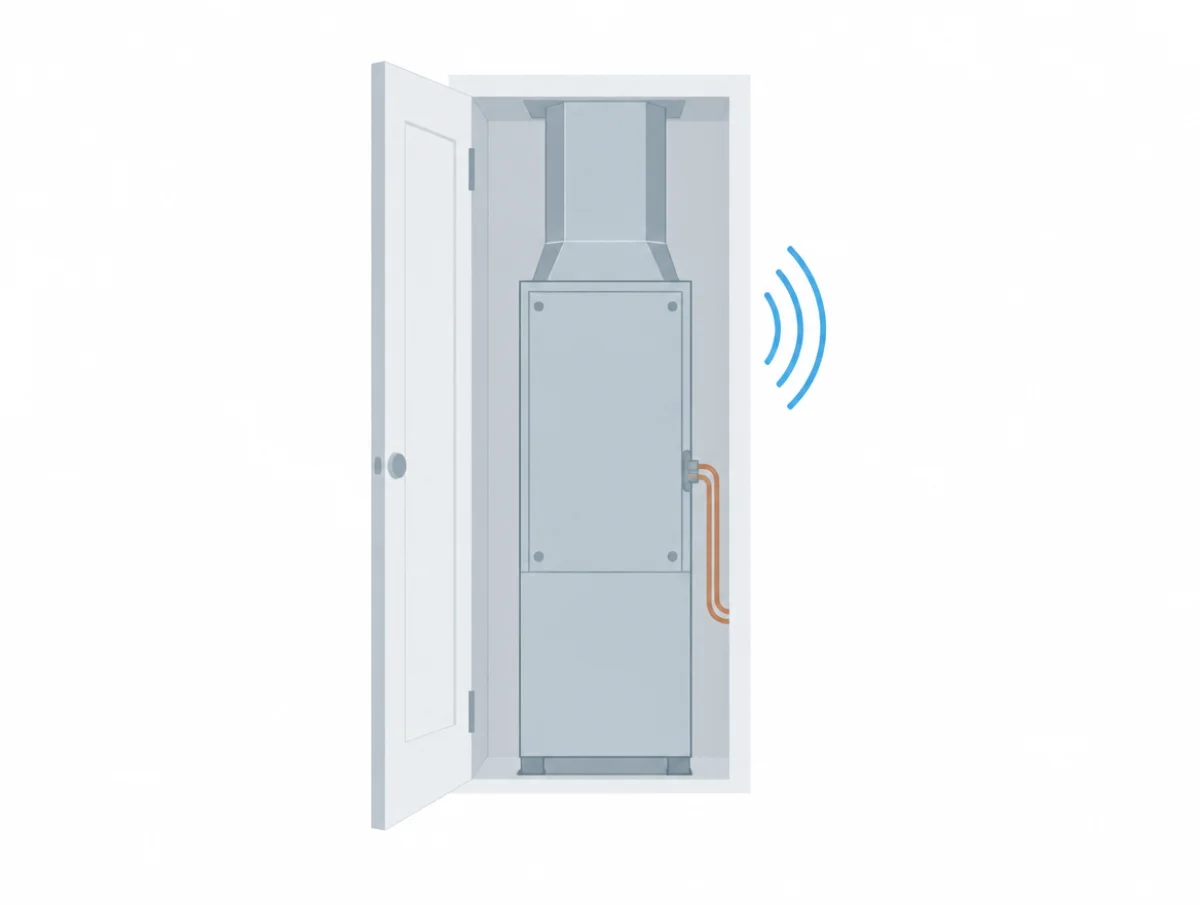
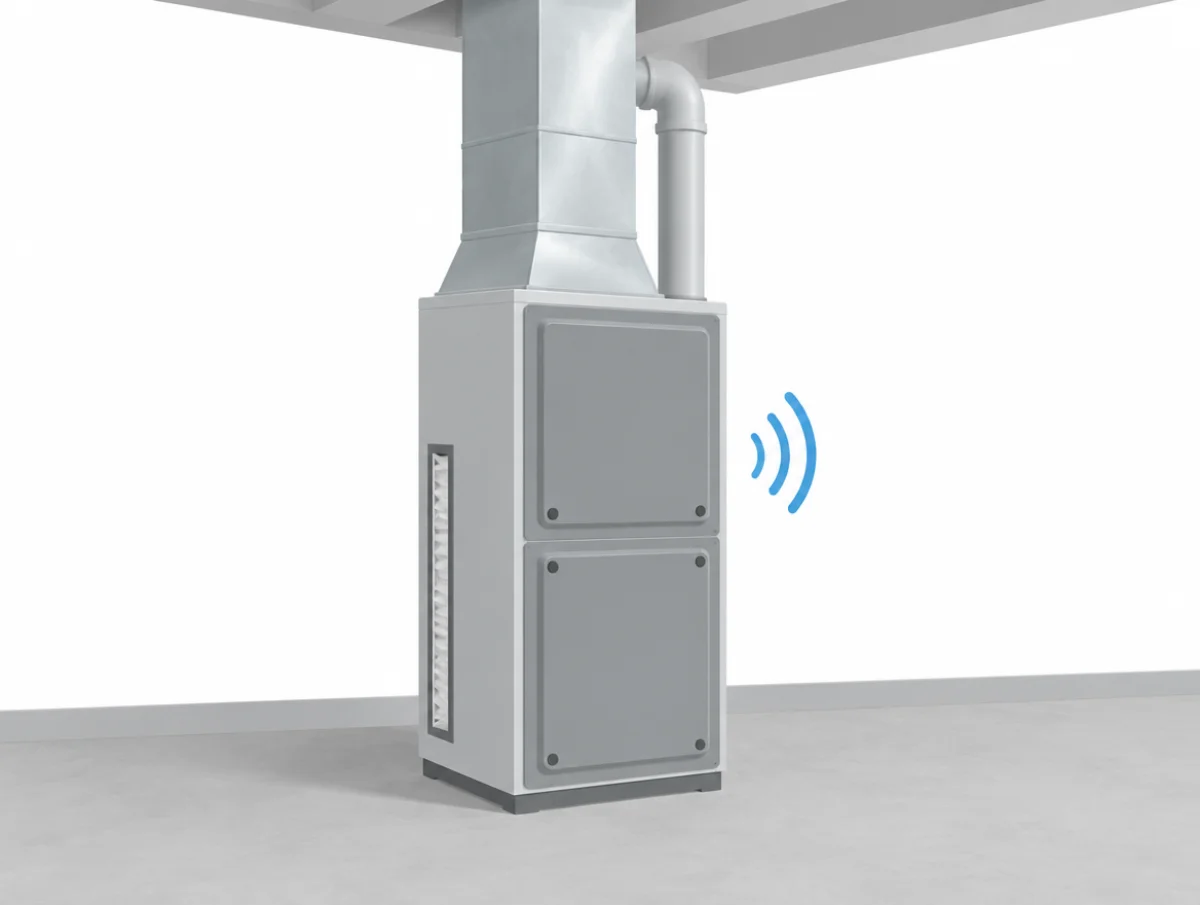
Indoor noise usually starts at the blower in the furnace or air handler, in the ducts and vents, or where refrigerant lines touch the framing. Each of those goes to a dealer or installer.
At the supply registers, Goodman describes "a pressure imbalance" when the filter or vents are blocked, the return ductwork is impaired or "too many registers are closed off". Loose ducts or debris "may reverberate or echo sounds through the registers". Leaky ducts, by Daikin's account, can make "a whistling or rattling noise."
The line set is the installer's business. Carrier's 24VNA6 installation instructions trace some complaints straight back to the install: "noise in the living area has been traced to gas pulsations from improper installation of equipment". Installers are told to avoid "direct tubing contact with water pipes, duct work, floor joists, wall studs, floors, and walls." Where the line set runs along joists, the outdoor unit "must be located at least 10 ft (3.05 m) away" from noise sensitive rooms such as bedrooms. Variable speed systems, the same instructions warn, "can be susceptible to lineset transmitted noise inside the dwelling".
The filter is the one indoor item that is yours to fix. Trane wants it changed every 30 to 90 days, and Goodman lists "Air filter needs to be changed" among the causes of a change in sound.
Noises that mean shut it off
Buzzing, hissing, grinding, screeching, banging, a high pitched condenser noise and any new loud noise each get that instruction from at least one maker. So do a burning smell, iced coils and a fan that hums without turning.
- Buzzing, a burning smell or iced coils: Carrier says shut off and call immediately.
- Buzzing, grinding or hissing: Bryant says turn the system off.
- Clanking, banging, squealing or prolonged hissing: Lennox says turn the system off until help arrives.
- Hissing, a high pitched outdoor noise, or a sudden loud noise: Trane says shut it off.
- A humming fan that stays still: Carrier says turn it off rather than let it run.
- A burning electrical or plastic smell at either unit: Trane says shut off and call for repairs.
The wait matters less than the switch. Turning the system off, Lennox reasons, can "prevent what may be a small issue from turning into a bigger one."
What can you check yourself first?
The thermostat and the breaker, which Carrier, Bryant and Lennox all treat as basic checks. Bryant allows one reset: "Reset a tripped breaker once. If it trips again, leave it off and call for service." A breaker that trips again straight away should not be forced, because to Carrier that points to a deeper electrical issue.
With the power off, look at the outdoor unit without reaching in, and keep "the area around the AC unit or heat pump clear for two feet all around," as Trane asks.
Write the sound down before the visit. "Notating new sounds may assist an HVAC dealer with determining the probable cause and a potential fix," in Goodman's experience. On a new system, Trane's advice is to call the installer first.
Leave the cabinet shut, as Bryant insists: "Do not attempt to disassemble the outdoor unit or handle electrical or refrigerant components yourself."
A system that has crept louder over the years may have one of the plainer causes in why appliances get louder.
How loud is a normal central air conditioner?
Somewhere between 52 and 77 dBA on paper. Those are the AHRI 270 ratings for the outdoor condensers in our quietest central air conditioners guide, with the 52 at the lowest speed and the 77 at full load. They are rated figures, not readings at your window.
Brand by brand, the spec sheets we have collected print these ranges:
| Brand | Rated range |
|---|---|
| Carrier and Bryant | 55 to 78 dBA |
| Trane | 64 to 76 dBA |
| American Standard | 52 to 76 dBA |
| Lennox | 58 to 80 dBA |
| Goodman, Amana and Daikin | 61 to 77 dBA |
| Rheem and Ruud | 54 to 76 dBA |
| York | 70 to 77 dBA |
When makers explain why one unit is quieter than another, they point at the fan and the compressor speed. "with some condensing units, the fan can be another source of bothersome noise," reads a Ruud page, and a manager quoted on a Rheem page says systems with "low-cost, inefficient fan motors are generally louder". Neither page goes through individual noises, and York has no homeowner page on them that we could find.
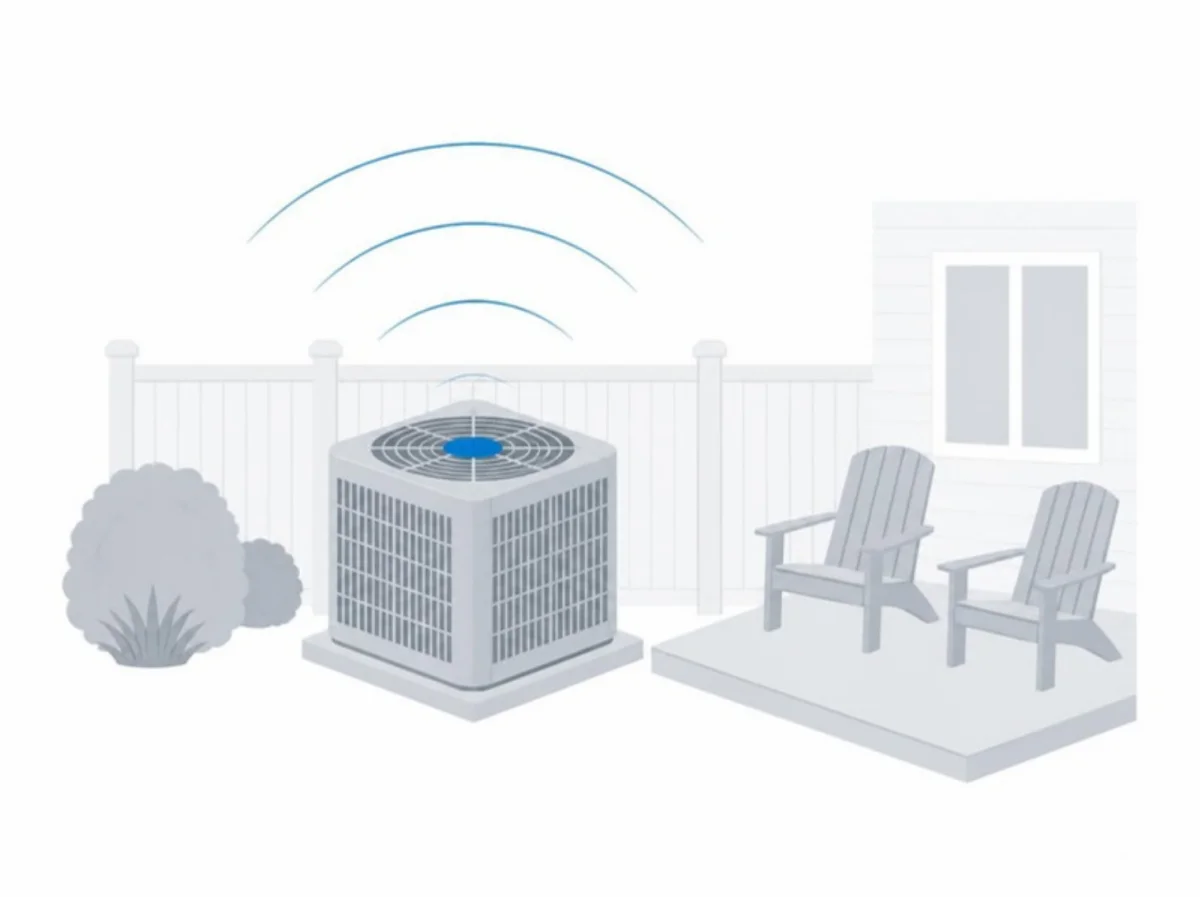
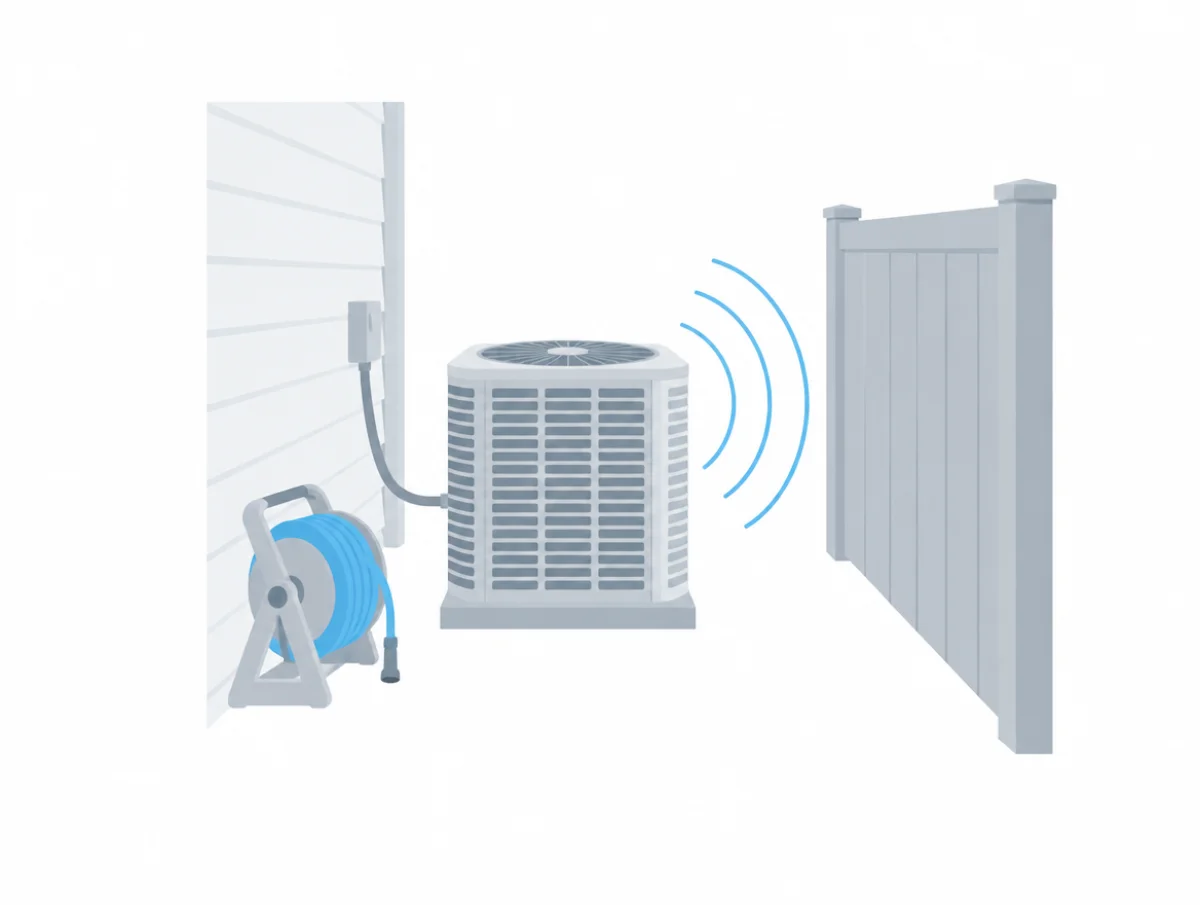
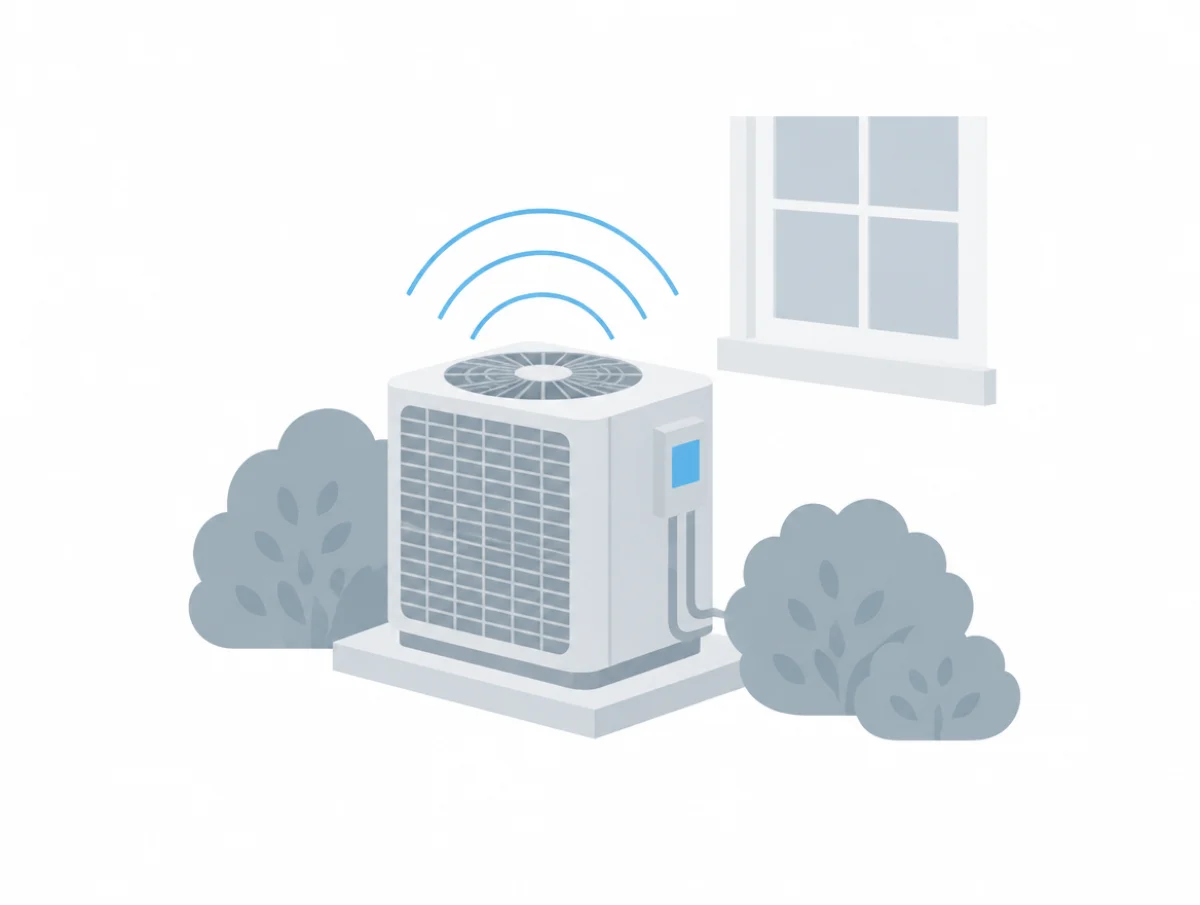
Where the unit sits can count as much as its rating. Carrier's 24ACB7 instructions tell installers to "Locate unit away from windows, patios, decks, etc. where unit operation sound may disturb customer." Daikin warns that a unit too close to "bedrooms, windows, or a neighboring property line" can make "even normal operation" a nuisance.
Read the dBA explainer and the decibel chart before setting brands side by side. The indoor half of a split system has its own list of quietest air handlers.