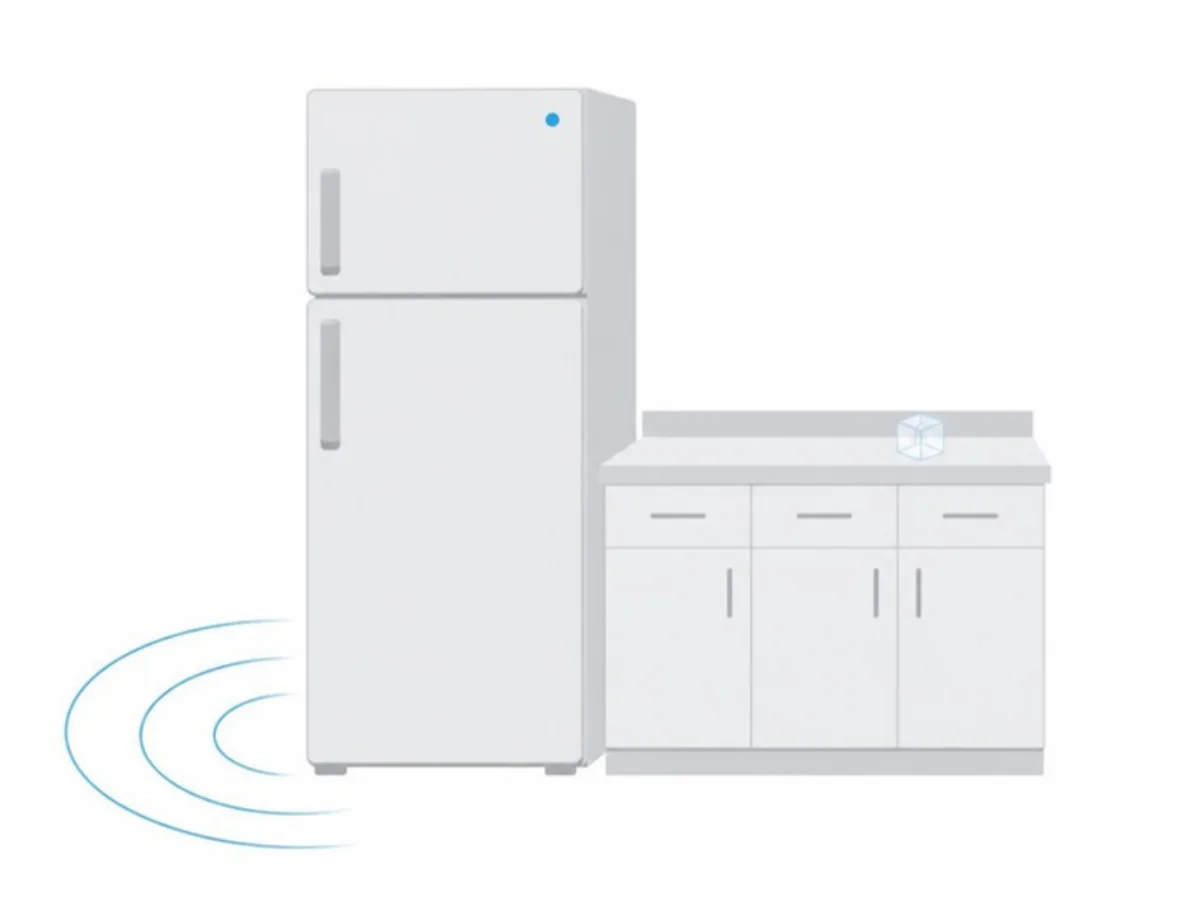
Festa Radon Technologies compares a healthy radon fan to a refrigerator: most modern ones give "a low hum similar to that of a refrigerator". The fan runs day and night, pulling soil gas from under the slab and pushing it out above the roof, and a hum plus the rush of air in the pipe is what it should sound like.
RadonAway, Festa, Fantech and Infiltec describe the rest. Grinding, squealing or rattling from the motor counts as a fault. So does a howl or sudden loudness in hard frost, and a fan that goes silent or keeps switching itself off.
Everything below is quoted from their installation manuals, product pages and support articles, and it is about the fan and its pipe. Nothing here is advice on radon levels or health. For those, and for any change to the system, RadonAway and Festa point homeowners to a certified radon mitigation professional, and so do we.
A working fan hums
RadonAway's installation instructions for the RP and XP Pro Series (IN095 Rev J) set a condition on quiet. These fans, "when installed properly, operate with little or no noticeable noise to the building occupants." That condition carries most of this page, because the bulk of the noise problems below come from how a fan was mounted and piped, not from the motor.
Seven Festa blog posts, published between July 2023 and January 2026, are quoted on this page. The September 2025 post on fan noise describes the motor "producing a low humming noise similar to a bathroom exhaust fan", and adds that "the sound of the fan is usually less noticeable than the airflow." Another says "A working radon fan will make some sort of noise", usually "a steady humming or whirring sound".
Silence is the sound to worry about
"If you suddenly notice total silence where there used to be a gentle sound, there could be an issue with your radon system." For Festa, quiet is the warning. Unplug the fan, plug it back in, then check the manometer, the outlet and the breaker.
The fan "must run continuously, so don’t turn it off or unplug it," RadonAway's homeowner FAQ insists. One you can no longer hear deserves a check the same day.
Why is my radon fan louder at night?
It isn't, usually. A radon fan runs at one steady speed, and night noise mostly means the house has gone quiet. The rush of air "becomes more noticeable during quiet evening hours but rarely interferes with normal activities or sleep."
RadonAway's spec table rates its RP and XP fans for "Continuous Duty" at 3000 RPM. Neither company describes a fan changing speed after dark. What changes is how much else you can hear, and whether the pipe runs past a bedroom.
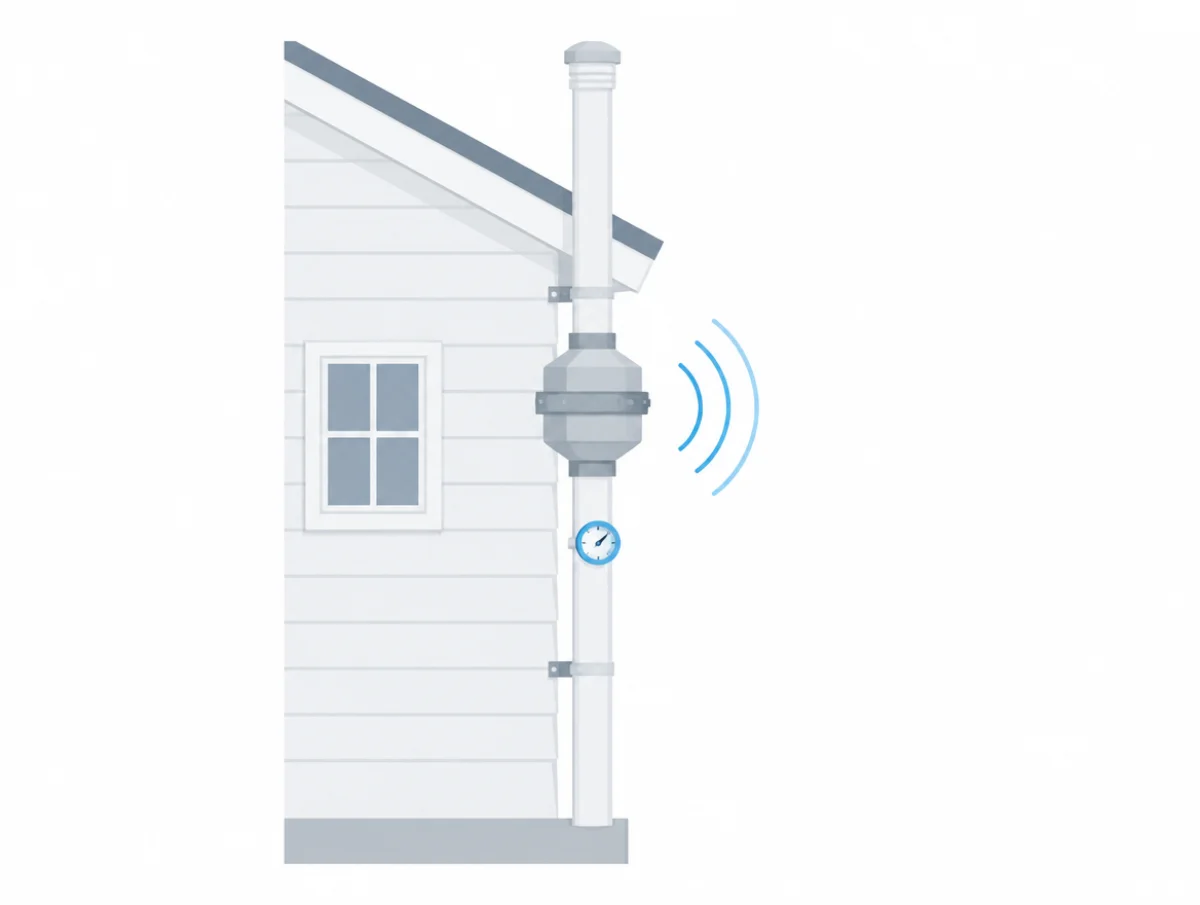
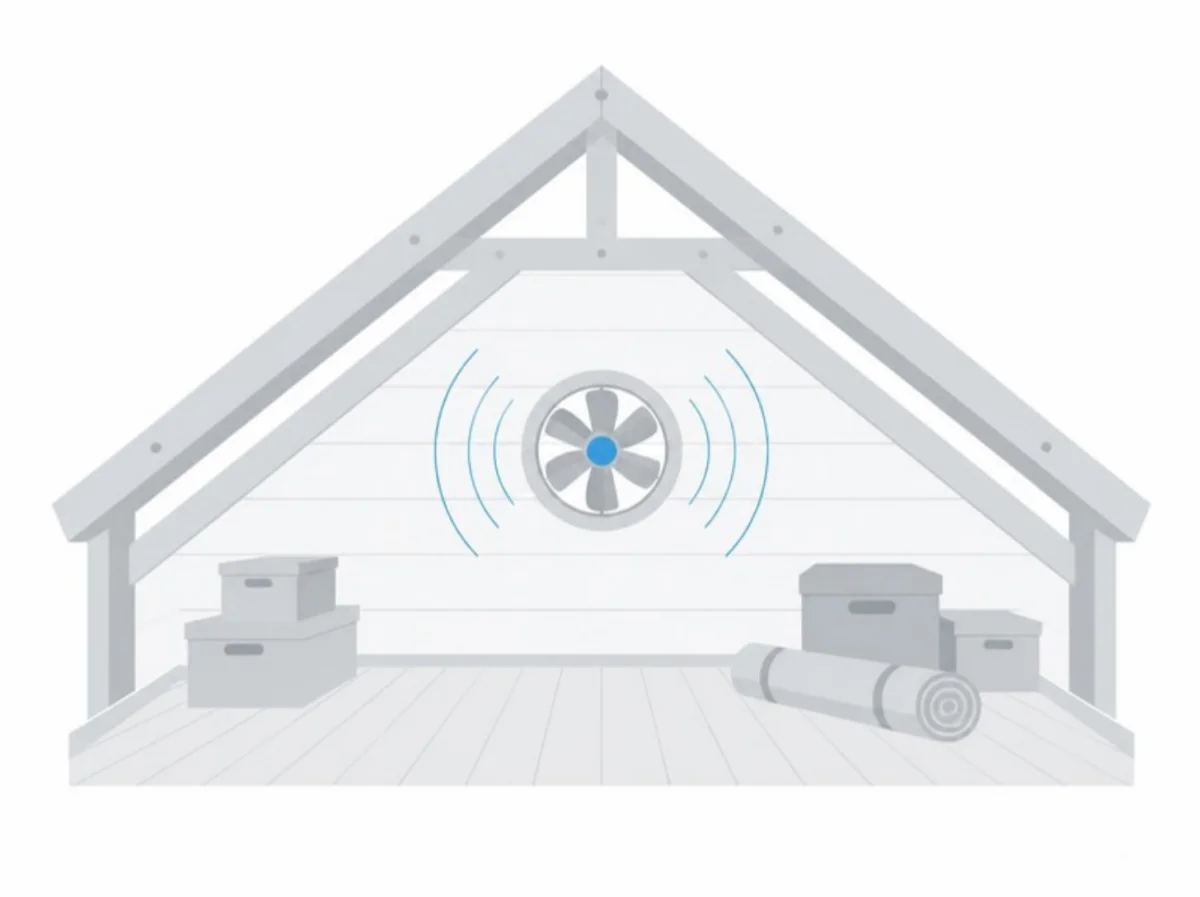
Routing helps. Festa wants the pipe from basement to attic "in a hall closet rather than a bedroom closet", and the fan on the outside of the house or in the attic, since "Exterior placement reduces noise disruption." Other night sources are in our quiet bedroom guide.
If the noise is new and the weather is far below freezing, skip ahead to the winter section.
Humming through the walls means contact
When the hum comes through the walls, the fan or its pipe is touching the building. RadonAway wants a fan that "does not contact any building surface to avoid vibration noise", and Festa traces the spreading hum to piping that touches "a wall or beam".
That motor hum or buzz "only happens if the piping touches a wall or beam within your home, and it’s easy to fix," according to Festa's soundproofing post. A common source is builders who pre-pipe a house and "fail to secure the pipes properly", which causes "reverberations where it is touching the inside of the walls".
For attic fans the pipe inside the wall should be one that "is securely installed", and Festa goes further: "We also recommend inserting insulation between the pipe and the wall to prevent noise." For any loud system, its first step is to "Check all mounting brackets and pipe connections for looseness."
How do makers say to mount a radon fan?
Upright. RadonAway mounts the fan "vertically with outlet up", "plumb and level", hung on the pipe or on an optional bracket, and "Foam or rubber grommets may also be used between the bracket and mounting surface for vibration isolation." The piping is finished "using flexible couplings as a means of disconnect for servicing the unit and for vibration isolation." For the supports along the run, the accessory catalog has an "Antivibration Grommet for 2-Hole Pipe Strap" and a "Neoprene Antivibration Sponge" for HangerLok pipe hangers.
Fantech makes its own couplings. The LDVI couplings on its Rn2 sheet (a 2018 document a distributor keeps online) are "molded with a more flexible, low durometer material as compared to standard plumbing couplings", and the brochure says the FRIK kit couplers "help make a radon active soil depressurization (ASD) system installation quieter by providing superior vibration isolation."
Festa's choice is soft Fernco couplings between pipe and fan, which "act as shock absorbers", plus rubber mounting pads "where the fan connects to a wall or support beam." If the pipe shakes, it suggests "reinforced brackets or adding vibration-dampening mounts".
Do not wrap the fan
Foam or rubber on pipes and brackets is fine. The fan itself is not: "you should never wrap or insulate the radon fan itself because it can lead to overheating and system failure." Insulation around the fan "is not required" by RadonAway either. Turn the power off before any of this work.
The whoosh at the vent is exhaust air
That whoosh is air leaving the pipe. RadonAway concedes the “rushing” sound of outlet air "may be disturbing" in some cases, and sells the RadonAway Exhaust Muffler for it, "normally installed at the end of the vent pipe."
Design decides a lot of it. "The velocity of the outgoing air should be considered in the overall system design," and the duct from fan to outside "has a strong effect on noise and fan energy use." RadonAway's rule is "the shortest, straightest duct routing possible", with no smaller pipe than recommended.
Festa hears the rush where the pipe changes, "especially at pipe joints, elbows, or where the pipe diameter changes", and notes that "straight runs with minimal bends reduce turbulence". Size counts as well: "oversized systems can create excessive airflow turbulence", so a fan bigger than the house needs may whoosh more.
Festa's mufflers "attach to the exhaust side of the fan and typically feature a layer of foam within a PVC pipe." The Diamond Muffler uses acoustic foam "to alter the frequency of the noise". Neither company puts a decibel reduction on a muffler. Fans mounted on the outside of a house, Festa adds, "may be more audible from the outside".
Water in the pipe should drain, not sit
Water in a radon pipe is usually condensation running back down, and RadonAway, Festa and Infiltec all expect it. It forms "when the air in the piping is chilled below its dew point", typically in an attic, a garage or outdoors.
"The system design must provide a means for water to drain back to a slab hole." The fan "MUST be mounted vertically plumb and level, with the outlet pointing up for proper drainage through the fan", and never where water can collect in the housing. For 4 in. pipe, RadonAway's minimum rise is 1/8 in. per foot of run at 25 CFM, 1/4 in. at 50 CFM and 3/8 in. at 100 CFM.
Infiltec's radon FAQ, last updated in August 2016, gets emphatic: "You can not imagine how much water flows back down the pipe because of condensation on the cooler pipe walls!" Its rule is to "Slope the pipe and anchor it so that water draining from condensation and rain will not be trapped anywhere", and its warning is stark. "Water buildup in the pipe or fan body may be the most common cause of radon system failure."
"In a properly functioning system, this water simply drips back down the pipe and drains into the ground," Festa's winter post agrees. The trouble starts when the pipe settles, because "Even a slight dip can create a trap for water," and fixing the pitch "often requires adjusting the pipe hangers or straps".
What water sounds like in a radon pipe is something none of these documents describes. We cannot tell you which gurgles are normal. We can tell you the makers agree water should drain.
Water drawn up from under the slab
One more case comes from RadonAway. When "a temporary high water table results in water at or above slab level, water may be drawn into the riser pipes", blocking the airflow. Without cooling air the fan may cycle "on and off as the internal temperature rises above the thermal cutoff."
The advice then is that "the fan be turned off until the water recedes". It is the only time a RadonAway document says to switch the fan off. The manual is written for installers, so make that call with whoever installed your system.
Why is my radon fan loud in winter?
Ice. In deep cold, the exhaust stack can freeze shut, and a fully blocked pipe makes the system "unusually loud as the fan struggles against the backpressure."
Soil air stays "around fifty to sixty degrees Fahrenheit" and "contains a high amount of moisture". In the cold part of the stack that water condenses, and in extreme cold it freezes before it can drain, building up "until the ice completely seals the opening." The weight of the ice "can even damage the pipe or the fan housing itself."
Festa's tell: "If you notice the manometer gauge reading zero or hear the fan making a strange howling noise, ice is likely blocking the pipe." With the stack blocked, "the vacuum under the slab disappears".
Preventing and clearing ice
Prevention means insulating the pipe in unheated spaces and above the roof, using self regulating heat trace cable rated for PVC in severe climates, choosing a stronger fan for long or restricted runs, and keeping a steady upward pitch toward the exhaust. The insulation goes on the pipe, never on the fan.
To thaw a frozen pipe, Festa suggests "a hairdryer or a heat gun on a low setting" on the exposed section, moved back and forth. Pouring warm water down the stack from the roof also works but "requires safe access to the roof, which presents significant risks in winter conditions". Blowtorches and open flame are out entirely, because burning PVC "releases toxic fumes".
"A loud fan or a dropped pressure gauge demands immediate attention." If you cannot reach the pipe safely, call your mitigator.
Grinding, rattling or squealing from the motor
These point to worn bearings or a failing motor. The sounds "often indicate bearing wear or motor problems that require immediate attention to prevent system failure."
Festa is blunt about the outcome: "if the fan suddenly becomes noisy, it’s a sign that the bearings in the motor have gone bad and it’s time for a fan replacement." Its fan checking guide lists what to listen for, "clattering or bouncing noises, high-pitched squealing, and any sort of grinding or scraping."
Most fans last "five to ten years", depending on model, climate and site, and warranties "typically last for five years". RadonAway's manual offers a five year extended warranty with professional installation.
Repairs are off the table. "There are no user serviceable parts located inside the fan unit. Do NOT attempt to open." A faulty RadonAway fan goes back to the factory under warranty or gets replaced. Still, check the easy thing first, since a rattle can be a loose bracket or clamp rather than the motor.
A fan that keeps stopping and starting
Cutting out and restarting can mean overheating, which RadonAway ties to the thermal cutoff when water blocks the airflow. A breaker that keeps tripping needs "a professional to investigate an underlying electrical issue", in Festa's view, and all wiring "must be performed by a qualified and licensed electrician."
What should a radon manometer read?
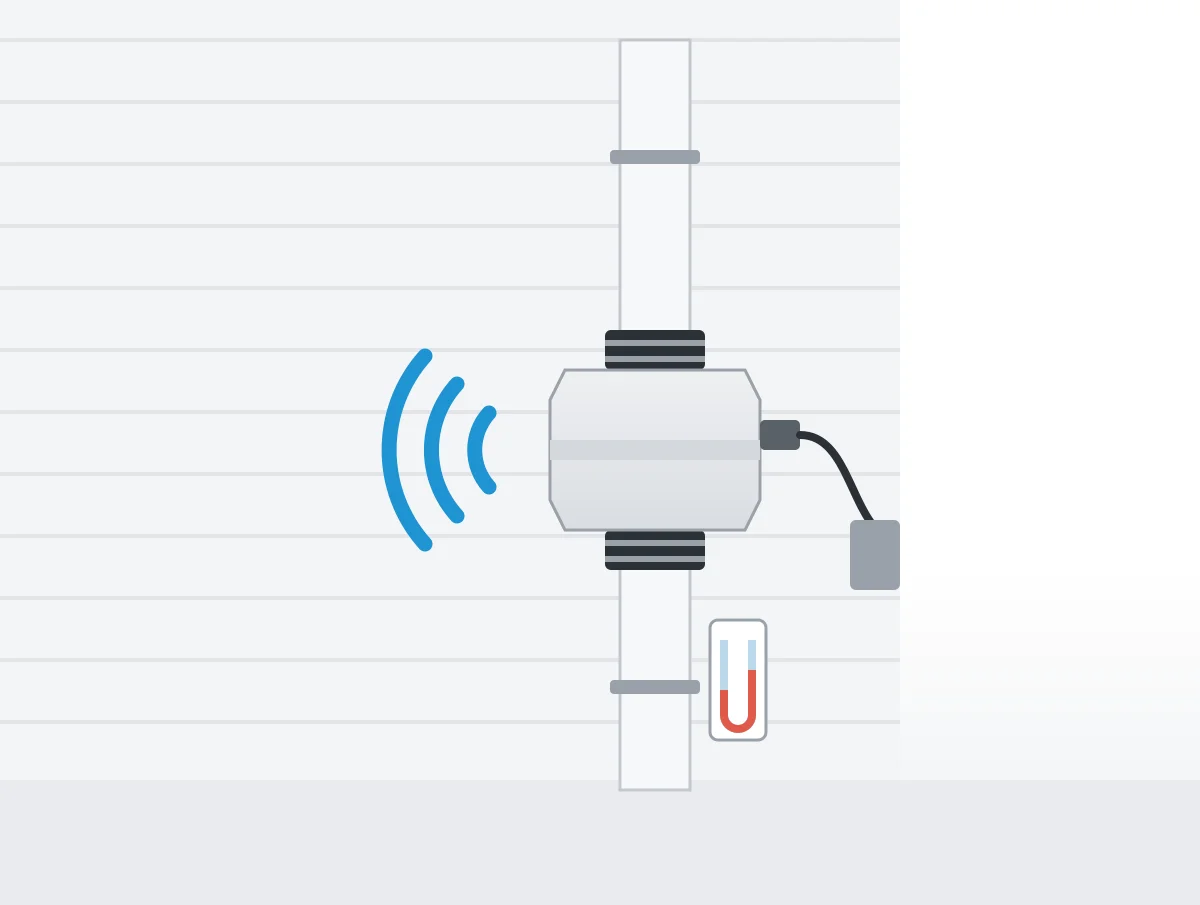
A U-tube manometer shows suction in the pipe, not radon. Festa calls 0.5 to 1.75 inches ideal on a working system; RadonAway sets a maximum for each fan model instead of one range.
"The fluid levels in your manometer do not directly indicate how much radon is in your home." With the fan running, the two sides of the U sit at different heights. Three readings signal a problem:
| Reading | Festa's meaning |
|---|---|
| Zero | the system "is not hooked up to power" |
| Equal levels | "power and suction are insufficient" |
| Maximum | possibly "too much suction in the vent pipe" |
RadonAway's annual check confirms the vacuum is in the normal range and below the "maximum recommended operating pressure". Those ceilings, reduced by about 4% per 1,000 feet of altitude, are:
| Fan | Maximum (in. WC) |
|---|---|
| RP140 | 0.6 |
| RP145 | 1.7 |
| RP260 | 1.3 |
| RP265 | 2.3 |
| RP380 | 2.0 |
| XP151 | 1.4 |
| XP201 | 1.6 |
Your own normal reading is the benchmark
The two scales do not always agree. A reading of 1.0 in. sits inside Festa's ideal range and above RadonAway's 0.6 in. WC ceiling for the RP140, which makes the reading your installer left the one to trust. Festa's tip: "Snap a pic of your normal manometer reading for reference."
RadonAway requires a system monitor, either a manometer or an audible alarm, "to notify the occupants of a fan system malfunction", plus a label telling occupants how to reach the installing contractor. The manometer belongs "below the fan", Festa adds, set to zero when fitted.
Reading the gauge alongside the sound
Check the gauge whenever the sound changes. A normal hum with the fluid uneven at its usual level means the fan is working. Silence with level fluid means the fan "isn’t running". A loud fan or a howl in hard frost with the gauge at zero means ice, most likely.
What a manometer cannot show is whether a noisy system still keeps radon down. For that, Festa recommends a radon test or a continuous radon monitor, compared with results from before the system went in, and calls a rising trend "your cue to investigate further."
Where the makers disagree
On vibration and bearings they agree. They part ways on water, the gauge, switching off and speed controls.
Festa's fan checking guide treats visible water or pooling at joints as a sign that "airflow could be disrupted" or that pipes need insulating, while RadonAway, Infiltec and Festa's own winter post all expect condensation to run back down a well pitched pipe. On the gauge, Festa gives every system one ideal window of 0.5 to 1.75 inches, and RadonAway gives each fan its own maximum, some as low as 0.6 in. WC.
Switching off is murkier. RadonAway's homeowner FAQ says never turn the fan off; its installer manual says turn it off when ground water floods the riser; Festa says unplug and replug a silent fan, and cut power before working on mounts.
Then speed. "Use of speed controls is not generally recommended" on RadonAway's RP and XP fans, yet Festa sells ECS fans with built in speed dials, and its Maverick ECS page says you can "lower speed to decrease noise level".
When is radon fan noise a sign of a fault?
When it is new, mechanical, or arrives with a changed gauge reading. Festa sends grinding, squealing and sudden loudness to a professional, and RadonAway's system label points occupants to the installing contractor.
"Complex noise issues or sounds that suddenly develop in previously quiet systems often require professional attention." If you hear "rattling or grinding", you "should have it inspected by a professional." DIY work on the system can cause "air leaks" that "reduce the effectiveness of radon mitigation", so Festa's advice for noise that remains after simple fixes is to call "a licensed radon mitigation professional". RadonAway's homeowner FAQ agrees: "Fixing your home is best left to a professional."
Do not open the fan, and leave the wiring to a licensed electrician.
Checks before calling a mitigator
None of these needs tools or an open fan. They come from Festa and RadonAway, with Infiltec on sagging pipe:
- Listen for silence, then check the plug, the outlet reset and the breaker
- Compare the manometer with a photo of your normal reading
- Look for pipe or fan touching a wall, beam or joist
- With the power off, tighten loose brackets and clamps
- Look along accessible pipe for sags that could hold water
- Check the exhaust for leaves or snow, only if you can reach it safely
If none of these explains it, or the sound is grinding, squealing or a winter howl, call the contractor named on your system label.
How loud should a radon fan be?
Festa estimates 50 to 75 dB, with its quietest models at 50 to 55 dB. Suncourt's RDN04 kit carries a 59 dBA, 4 sone rating. RadonAway and Fantech print no noise figure at all.
Those numbers come from our quietest radon fans guide, which copied them from Festa and Suncourt. Festa's blog says most properly working radon exhaust fans "produce between 50 and 75 decibels", and its product pages put the Phoenix EC and Triumph ECS at "50-55 dB" and its Extreme models and Fury at "70-75 dB", without naming a distance or a weighting.
High suction fans sit at the loud end, and undersized systems "work harder and create more noise". A fan picked for tight clay soil can be louder by design, while a quieter one may not move enough air for that slab. That trade is for a mitigator with a sub-slab test to settle, not a noise figure.
The sones and decibels explainer shows why Suncourt's rating cannot be ranked against Festa's, and the decibel chart puts 50 to 75 dB in context. A radon pipe often shares a basement with other machines on our quiet basement page, why appliances get louder covers wear in general, and fans that move room air rather than soil gas are in the quietest inline duct fans. Two sites are missing from this page: RadonAway's refused scripted requests, so its pages and manual were read in a browser, and Airthings' refused us entirely, so nothing is quoted from Airthings.